This is a series of three blog posts on Richard Mayer’s Learning Design Principles.
Can you teach anything to anyone as long as the learning is designed right? I think the answer is yes, but it requires very good learning design.
For example, if we are teaching photosynthesis by explaining chloroplasts, light-dependent reactions and the Calvin cycle all at once we overwhelm students.
According to Richard Mayer the solution isn't to simplify content. It's better sequencing.
Richard Mayer's research on "essential processing" shows us exactly how to present complex material so every student can master it.
The 3 "Building Blocks" Principles That Prevent Overwhelm:
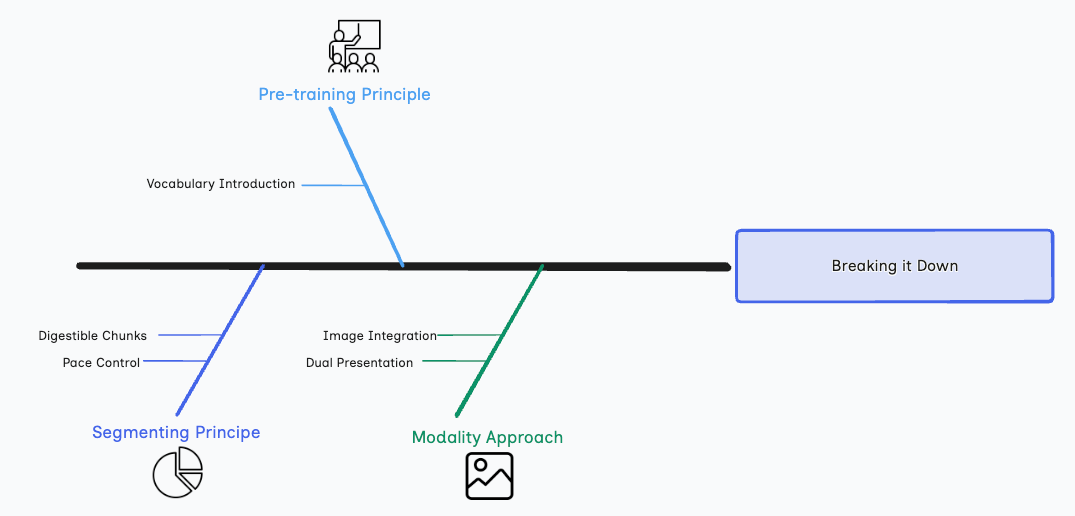
The Segmenting Principle
Mayer says we should break complex processes into digestible chunks. Students learn better when they can control the pace and process information step-by-step rather than all at once. We should present storyboards or diagrams step-by-step rather than all at once.
The Pre-training Principle
Teach the vocabulary first. Before diving into photosynthesis, ensure students know "chloroplast," "glucose," and "carbon dioxide." It's like giving them the tools before asking them to build. The visual keywords and frayer tools from chalk help with pre-teaching vocabulary.
The Modality Principle
Students learn better from images and words than words on their own. In fact, they both retain and transfer the knowledge more effectively!
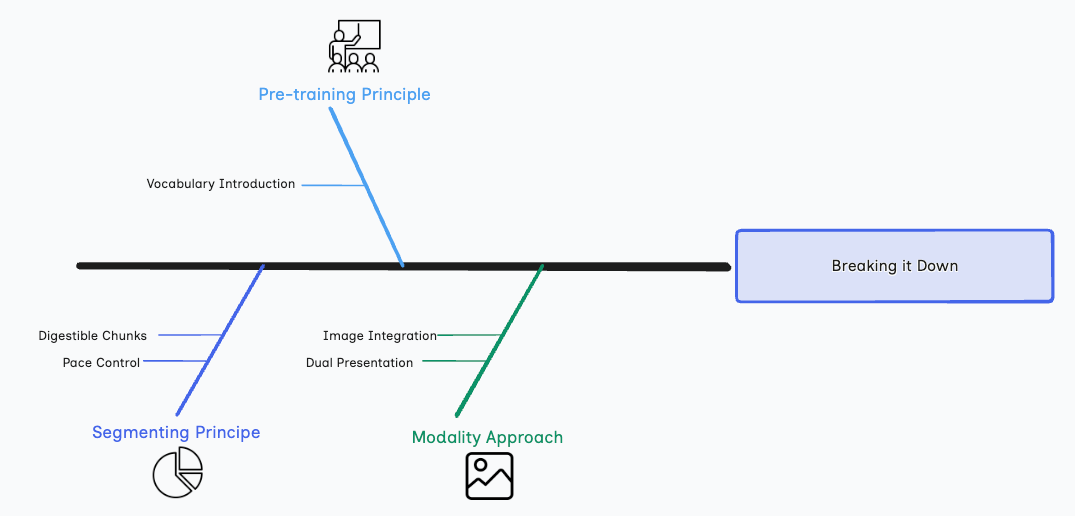
Fishbone Diagram made with Chalk graphic organizer tool. See diagram here.