How do we effectively design tasks that fit into the cycle of planning? In this episode Karl McGrath (author, teacher and Curriculum Task Design Lead at Benton Park Primary School) explains.
Below is the transcript as well as useful links!
LINKS:
Designing Tasks in Secondary Education
Terence (Map Maker) - example below.
Chalk Ambassador Application link
When I was sort of looking at it and when me and Phil were talking about it, this is kind of where it all come from. So I was really inspired by design and tasks in secondary education. Now, obviously I’m a primary school teacher and I was coming at it from tasks for primary school children, but that fit with the discipline and sit with the discipline.
So not just wheeling out the usual sort of activities that we do for kids, really just thinking about what I’m giving them and why I’m giving them that. And in the book, obviously, it breaks down subject by subject. Yes, it’s secondary, but there’s definitely things you can find within it that resonate, think, particularly for a subject lead as well. So if you’re a history lead looking to just challenge some of the tasks that are going on in school, I would just even pick this book up and look at the section on history.
because there’s just some really nice ideas and the research behind task design is really thoughtful. So the sequence, I sort of say, breaks down in intent. So obviously what you intend for the children to learn. Sequence, obviously that’s laid out. The task, effectively what the children are doing. Then the refinement as part of the process. Hopefully it’ll become a little bit more clearer as we go through. Carl, I had a quick question. So in terms of the sequence part,
Do you need to kind of coordinate between different teachers of different year groups? I think that the students are building skills. It’s a good question. And it’s one I think that was sort of if you’re a curriculum lead, sometimes it depends on the school nature. So obviously, if you’re a one form entry school, you might need to be very clear about how you’re setting out the sequence. But if you’re not a one form entry school and you’re lucky enough to have other subject leads or it’s not just one person doing like three people’s jobs.
then there’s different ways you can set it out. I would never mandate a very specific way to sequence, but I think it’s really important to think about the sequence. So I would never say you have to set things out in a specific way, but I do think it’s really important for the subject specialist, for example, to really have a clear eye about what the sequence is. So in our school, what we do is each subject lead plans out the sequence within the subject from year one, right up to year six.
So for example, our geography lead plans out what our geography sequence is in year six, even though she teaches in year two. And obviously there’s a constant sort of refinement process, we’ll explain when we get into that sort of part. But obviously it’s more about a relationship with the curriculum team, subject leaders, and obviously leadership and teachers. But hopefully when we go through, it’ll make it a little bit clearer. The big thing is that any sort of tasks
have to be treated as the curriculum in motion. So your intention has to be really crystal clear. So what is the knowledge and what is the disciplinary thinking the children are gonna enact? Now, obviously you can be thinking it from a subject specific point of view or you’re curriculumally trying to tie all this together. But you just need to think, well, what is the very basic core knowledge of what the children have to do? And I really like this phrase from the book. It’s curriculum in the room.
So that idea that tasks are the curriculum in action, it’s in the room, it’s live, it’s being lived. So it should feel like that. And obviously Tom Sherrington often talks about the core knowledge. And I think that’s a really lovely way to look at it. So we are making purposeful choices to select specific pieces of knowledge that we want our children to learn or attain to. The big thing is obviously we’ve got the national curriculum, we’re taking it from there, but
If you look at some of the statements in the national curriculum, it just basically says a post 1066 study such as, so there’s quite a lot of vagueness in things like history. There’s a bit more specificity when we’re talking about science, but obviously when we’re looking at these sort of geography concept based structures, it’s very broad. So whatever knowledge you pick, you have to be quite clear about the knowledge you’re leaving out and why you’re choosing to leave it out so that we don’t have this sort of strange bias situation going on.
And I think we’ll have to remember to think of it because sometimes I’ll see. So, for example, not long ago, somebody came to visit and they brought their disciplinary knowledge, their substantive knowledge curriculum. So it was basically laid out in the six lessons of substantive knowledge, the six lessons of disciplinary knowledge. And not that it was being harsh, but obviously the conversation needed to be broken down. So, you know, that’s not how it works. Obviously it has to be seen as this relationship between substantive knowledge and disciplinary knowledge.
It’s not like once the children have all the substantive stuff, they can do the disciplinary stuff better. It’s a relationship between the two. It’s kind of like a see-saw effect. Once you have one, you can do another better, but obviously there’s a relationship between them. So Mary Maid always goes on about this idea that they’re not just unrelated facts or elements that have to be just lined up, they hold each other together and that’s the real core of stickiness. So.
One of the things we felt was necessary was the real curriculum development and making sure that it’s very clear throughout the years what the children are doing and almost having that side on a page. Now schools went mad and everybody’s done roadmaps to death and you can do it a different way. It doesn’t really matter, but it’s having that really clear knowledge sequence and the summary of what you want children to know and do. Ultimately, what are they going to know and what are they going to do at the end of it?
How do the sort of concepts overlap? How do they lay next to each other? And obviously with ours, you can call them roadmaps, knowledge organizers, but really it’s just used to identify substantive knowledge, the things we want them to know. And then obviously we’ve got the disciplinary concepts within it. So for example, we then break each one down even further. So here we’ve got, this is our RE. So obviously the disciplinary concepts will be things like identity, belonging,
community and expression, excuse me, and then being really clear about the end of unit outcomes. So when we’re thinking about our intent, this is what we’re thinking about. So what is it we want the children to know, both the substantive concepts and obviously the disciplinary concepts, and then how do we want them to enact them? Now, your intention obviously is that curriculum in motion. So what is the knowledge?
And what’s the disciplinary knowledge? So people will sometimes say disciplinary knowledge is things like in history, and I’ll give an example in a sec. High historians know certain things. So how is it that historian finds out information that’s different to a geographer finding out information? And the example we often refer to is an artist versus a scientist. So a really clear disciplinary skill that you would have in science is observation.
So children have to observe things over time, over periods. That’s disciplinary knowledge. Artists also have that same function. They’re observing things over time, but in a very different way through very different lenses. So an artist’s way of thinking disciplinary would be to observe a painting and notice the way the lights hits a subject or the way the painting makes somebody feel or the way the tone is used.
Whereas a scientist are observing changes over time, obviously patterns that might emerge. So there’s more going on. Your intent obviously is what you intend them to learn. And I’m not talking about writing an intent statement, an implementation statement, an impact statement. I’m not talking about what we want our children to learn is. Just lay it out really clearly. And the way that you lay out your intention, I think, is to make it really clear in the sequence.
So it’s trying to bridge the gap between what you want the children to know and what they already have. So what is their sort of immediate everyday knowledge? And this is where I think early years colleagues are incredible because immediately they’re bringing children in and they’re meeting them at that starting point. And then they’re bringing them to the level that they need to be. Whereas sometimes in key stage two, we kind of lose that.
and think, well, they need to get here. It doesn’t matter where they’ve come from. And I think we often get sort of caught up in our curriculum needs to look this way. We’ve spent three years developing this. This is perfect. Now the tasks need to be sorted. And actually what I end up saying to people is it’s never done because you’re constantly having to meet each year group and each group of children at their point to then make sure the curriculum is developed in such a way that it matters.
So it is that merger between not understanding and understanding. So the way we’ve sort of laid it out, we were inspired by Alex Bedford. So in his book, People Book Study, instead of using a knowledge organizer, each lesson has a knowledge note. So for example, our geography lead lays out the subject from year one to year six and makes it really clear what we’re going to teach. Then she plans out the knowledge notes, same with our history lead.
she plans out the knowledge notes. And then what it means is the subject lead is really clear on what’s going on in the class. Theoretically, what is the key knowledge that they have to know? For me as a teacher, I find it incredibly freeing because I then have a go, well, this is the core knowledge. I have to plan the instruction. So I have to think about the way that the children interact with the knowledge in a way that’s going to make sense. We’ve done it differently in other subjects.
So in subjects like DT, obviously that’s not necessarily a knowledge rich subject. It’s one that’s acted out in the way you behave. ⁓ So there’s a lot of procedural knowledge in that. So we’ll lay it out in a way that we’re following a plan of things that we do. So the children will investigate, explore, practice, design, make, evaluate and improve. So they’re going through that process.
but obviously there’s different elements of knowledge that will sometimes weave in out of it because it’s a very enacted procedural subject. And we’ve sort of applied this to things like field work, because obviously the process will remain the same each time. So we’re sequencing the process out in such a way that it’s very consistent across schools so everybody knows exactly what they need to do.
Otherwise, we do things, is the narration. I think subjects like history, RE, it’s really important to have a very clear narration of that sequence throughout the unit. So for example, with this one, this is an example of our RE roadmap. And obviously it gives us a very clear idea of at a glance where we’re starting and where do we need to end.
⁓ And what you don’t necessarily see in this RE1 is this also links and crossovers to other subjects. So where does it link to previous units in year four? Where does it link to previous units going forward? Is there somewhere else? And obviously for us in year six, we just know it’s always going to be secondary still. And as much as we would want to have a greater connection, it just doesn’t always work the way it does. And then obviously the computing roadmap.
Again, very different. It’s just thinking about the journey of this particular set of skills that we’re Carl, I really like these and I was wondering, how do you use them in the lesson? Do you kind of like show the students step by step as you go through unit or you show them kind of like the whole thing at the start of the unit? So these were sort of built up slowly so the children see that picture emerging.
In the past, I’ve done it where I’ve put it in the front of the books so they have access to it. And each week we introduced that we’re on this point in the road. And I think sometimes that works, but I think it depends on the unit and depends on the amount of information you’re given in that lesson. Cause you don’t want to just overload with the amount of content. You want to go, we’re doing this, then we’re to do this, then we’re going to do this. And sometimes I think it’s nice to have a bit of mystery. So at the minute we’re doing the tutors, ⁓ and it’s quite interesting to say, well,
This is the story we’re telling. We’re telling the story of intrigue, treason, plot, and constant changing of religious beliefs. And we’ll just see what happens next week. It doesn’t have to be such a sort of procedural drab process. can just go, next week, we’ll see where we are in the mystery. And I think that is really significant as well. And I think you just have to think and take a moment and step back and go, well, what is it I’m trying to tell?
And even this afternoon, so our deputy was teaching in the other class a history lesson that I taught yesterday. He was very pleased with himself. He sort of commended an air punch and just sort of said, you know, it’s just the story you’re telling. That idea of the Spanish Armada, like going through from start to finish and telling that really clear story. And he said, obviously the kids get hung up on one particular small thing, but you have to go, let’s think about it properly.
did this actually matter in the grand scheme of things? What was the more important part in that sequence? And then you go, that’s the bit. And obviously it’s all about the teacher as the narrator going through that real clear sequence, real clear story, not being an expert, but just taking them along on that real sense of moment and intrigue. I probably should have put this a bit earlier. Sorry, Phil. No, I was just going to say, that’s really interesting about like the students anticipating the next step in the story.
I was just going to say as well, Kate’s got a question, is, ⁓ she’d be interested in what these might look like for English and maths. I was just wondering if you had any. Yeah. So do you think that it’s one of the ones that don’t do for English and maths? and I find it a really interesting discussion. So we’ve tried occasionally to do them for English and maths. ⁓ and I think the difference I find is because we’re teaching maths every single day, for example.
it becomes very much an ongoing adaptive process. today, obviously we’re teaching long multiplication or multiplying by two by two. And what I found is the children are really helped, held onto the expanded method. So I need the flexibility to go, we’re going to take another two lessons on this because you’re stuck on the expanded method and I need you to feel more confident using this particular tool.
And one of the ways I explain it to the kids is you might not like it. So for example, long division is a perfect one. Some of the children know that they can do short division and get the same answer much quicker. But I just have to explain, you know, this is a tool that we’re going to teach you and it’s not a tool that you necessarily choose to use, but it’s a tool you need to practice. Because sometimes you have to practice tools that you may not ever need because you need to know which is the best tool for the job. And the only way to do that is to be able to experience some of them.
And I think that’s why we haven’t done it in maths. We do have a framework and obviously we follow roughly a similar sort of idea to white rose, for example. But then what we’ve found over the last couple of years is following that very rigidly ended up tying us in knots and feeling like we’re going through a lot of unnecessary content that could be delivered in other ways. So in year six, one of the things that is a lesson in some of the schemes is the rules of divisibility.
So knowing that if I add all the digits together and divide it by three, then I know that it’s divisible by three, blah, blah, blah, blah. I don’t think that’s a lesson. I think that’s something you can do periodically in something that we use as the key instant recall facts. So we give 10 minutes ⁓ on a Monday, Wednesday and Friday to go through those really basic key skills that you practice. So rather than saying, you’re going to have a lesson for this, a lesson for this, a lesson for this, broadly, these are the things that you have to hit.
⁓ And that’s kind of what we do. English, we follow a text based system. So obviously we choose a book and that book informs our writing. So we build up to each piece of writing we’re doing. So at the minute we’re doing treason because it works really nicely with the tutors and obviously the time period. And we find it adds a little bit of extra information to the children. So they’ve got a wider context of Tutoring England as well. But it’s not a history book and we don’t really draw on it so much in history. make the occasional reference.
But where we do have a very clear plan is our grammar scheme, which is planned out with our English lead. And the idea is she’s made it very clear which objective that we need to focus on and which term. So we’re revisiting punctuation for contraction. So we’ll do two weeks on that at the beginning of every English lesson. And we do it slowly. We build up on different ways. So having a look at what it is, what it isn’t.
then obviously looking at jumbled examples, then obviously using it in practice and then spotting errors, so doing very rigid tasks at the beginning of each lesson, so that children are really seeing it over and over again. And the idea is that constant trip feed means we’ll see it in the writing. But in terms of that full-on plan, we do a book-based plan where staff will have laid out how they’re using the book, what the writing opportunities are, and roughly when you’ll see them so the English lead can see that as well.
but try not to be as rigid. And I think it’s because there is a knowledge within English and maths, but it’s kind of fluid. And we know that some children grasp things much quicker than others. So if we respect the mastery approach in that aspect, then we’re trying to find depth rather than hit objectives, if that makes sense. I probably should have put this a little bit further up, but I think one of the...
sort of definitions we use a lot is knowing what substantive disciplinary and procedural is. People use different terms, we’ve decided to go with these ones, you might see it as something different and that’s absolutely fine, ⁓ but we use the term substantive knowledge to reference anything that is known and can be proved, refined, clarified or critiqued. So for example the dates of a coronation, ⁓ the name of a person who was king at this particular year,
or knowing that there is such a thing as a force and it acts on things. They’re all substantive ideas or concepts. Where it becomes disciplinary is that idea of how somebody within a field works to gain knowledge. So how is it that a historian acquires the knowledge that they have? How do they prove a fact to be true? How does an artist work? How does a computer scientist do what to do? That’s disciplinary knowledge.
We’ll make a really clear distinction. It’s not skills, because there is that sort of odd crossover. People say, we have disciplinary knowledge is not skills. It’s not. It’s obviously very field specific. So how does a geographer gain knowledge? They might have certain skills they use, but when you say things like skills, it implies that only geographers do those things. Whereas we’ve identified already scientists and artists do the same thing. There is.
that tiny extra bit, is procedural knowledge. And that’s sort of the method and processes and routines you use. So maths, PE, science, DT, computing, there’s a very specific procedure that you might need to follow at various points that will never change that procedural knowledge. ⁓ Secondary, think sometimes have different terms, but I think again, it’s all to do with semantics. And I think as long as you as a school can decide what you’re gonna call it, why it means this. ⁓
and what we’ve identified it as, I think that’s more important. And ultimately, with sort of the inspiration of Alex Bradford and Christine Council, this is what we want to come up with when we’re thinking about our intent and our sequence. We just want to be really clear, what do we want the children to know and do? So how are going to get them to think differently? How is it going to be different to what they did before? And ultimately, what’s the outcome? So we want them, you might change it, but we want them to question, reason and explain.
So our job is to find truth and create fascination and make it really irresistible to learn, not just here’s some facts, write it down in your book or here’s a map, color it in. Obviously it has to be really tangible, it has to be interesting in order that they can form an opinion, create it and communicate it. And I always come back to a boy in year five, no, year six, two years ago, and he said, well, you just tell me what to think. And I said, no, I don’t. I don’t tell you what to think. I tell you.
things and you should form your own opinion. And when we’re talking about the Syrian refugee crisis and obviously that whole conflict of should people come over or shouldn’t have come over. And that was the idea. So he felt that I was just telling him what to think. And I said, no, you should form an opinion. I’m just giving you the evidence and the information in which you can create an opinion, but it has to be based on fact, not just, well, I think so. And I think that’s the difference. The substantive knowledge is the real bridge.
in saying there is fact, there is provenance and we’ll have to go for it. And obviously we’re seeing that more and more now where opinions are being presented as facts all the time and children are consuming and it’s such a rate that we’re almost trying to get them to think differently without giving them the knowledge. So there always seems to be a conversation that comes around about the children are being prepared for jobs that don’t exist or
There’s 21st century skills, we’re not teaching them. And I just think we’re having the wrong argument because there are just things that children should know in order to form an opinion. And I think it’s not about saying they need to know about the tutors. It’s about what is it in this particular unit about the tutors and the disciplinary concept that’s going to build a layer of knowledge that’ll serve them as a sort of framework for every other thing that they do next. So it’s about making a real foundation of intrigue and interest.
and exploration. So obviously I just put these in as sort of examples of the types of objectives we sort of deal with in history, science and geography. And just generally how broad they are, they’re a bit paraphrased, but obviously science, we’ve got explore properties and different materials, understand how they can be changed. History, understand the importance of the Roman Empire and Britain and its legacy in terms of culture, architecture and governance.
and then geography investigate physical and human characteristics. But it’s all really boring. It’s all very curriculum speak. But how do we turn that into something that the children are interested in?
and it’s avoiding the sort of pizzazz. And I know that sounds counterproductive, but we often want to have this sort of jazzy hook lesson. But what we need is to think about what is the character arc? And I always go back to McComment and think if I was taking the tutors, this unit, and it was Peter Parker, and it was going on this journey through this lovely graphic novel, what would the journey be? Where are the obstacles? Where are the sticking points? And where is the point where all this comes together?
What’s the origin, what’s the arc and what’s the end point? And I think that’s the thing you have to think about. It’s trying to bring clarity to a really complicated mess. So when we talk about sequence, that’s what we’re looking for. We’re looking for the origin point. We’re looking for the key moments your character is gonna experience. And that character could be volcanoes if you’re teaching geography or that character could be, you you’re doing the tutors. So what are the tutors gonna experience?
And this is where we’re getting to the sort of meat because my role came about in school because our head teacher was frustrated with the types of tasks children were doing. They spent two years developing the curriculum. They felt that was in a decent place. They had a really clear understanding of what they wanted children to learn. They had a really clear understanding of what they wanted children to do with the understanding and the knowledge.
but it just didn’t look like they were doing anything in the books other than coloring in maps of the Anglo-Saxons, turning history lessons into English lessons, constantly writing up scientific investigations or just taking loads of pictures of investigations and sticking them in the books. And then what happened was the children, when asked about what they were learning, were unable to remember or talk about it confidently because it didn’t really work with it in a really
deep level. And that’s where we have to think about tasks and tasks design as turning that sequence into something that children actually do and making the distinction between an activity which requires very little of them or task that actually gets the children involved and become agents of their own knowledge. So we sort of take or took sorry, Edward’s tasks design model.
and lept from there and thought, well, how does that work in concepts? So if you think about your sequence, you’re introducing Brownlee concepts to the children and you would model them in ways that make it engaging, not like, you know, I’m going to come in dressed as Henry VIII because I’m sure that would be very fetching. And that’ll be engaging, but it will also be all the remember. So we want it to be engaging in that way that we’re telling a very specific story and the story is interesting in itself.
And always think about Mark Enzer, who talks about people hiding subjects in a shroud of something else. So it’s almost like we want to hide geography from the children and make it not seem like geography by wrapping it up in something else. But actually geography is fascinating when you tell the story right. And what we then do is we start thinking, okay, well, I’ve got this key concept. I’m not really sure what I need to do with it. So I need to make it structured.
And I need to think very clearly about what the children are doing. Obviously, I’ll share some examples, which hopefully will enlighten it more. But it’s thinking about the ways of inquiring within that subject. So how would a geography approach this idea? Or how would a geographer approach it? How would a historian approach it? How would a scientist approach it? And think about almost modeling that kind of way of working, because you’re using that kind of knowledge. Then you want to get them to a point where you’re using more open-ended tasks.
So they’re developing the ability to apply that knowledge in a different way. Now I’m not saying all four quadrants would exist in one lesson. They might, depending on how much prerequisite knowledge they have. So if you’re doing something where you know full well based on previous years or the last couple of weeks of your teaching, the children have got to a point where they can go back and forth between new and previous knowledge and understanding, that’s absolutely fine. You know them best. But it’s thinking, how can they apply this to another concept?
So for example, today in science, we were doing the blood vessels and one of the tasks was three different arrows that were presented slightly differently, darker, wider, and the children had to use the lessons and the understanding of the sequence of learning so far on blood vessels and the circulatory system and think, well, I think that arrow is a vein because, and it was quite interesting the differences the children come up with. So one of the arrows was thicker and brighter. One of the children said, well, that’s definitely
an artery because it’s facing upwards, so it’s going towards the heart, down the way from the heart, think he said, and it’s wider because it handles higher pressure. But then another child said, well, I think that’s a vein because I know that it’s wider inside the vein, so they’ve got greater space inside. And I thought, oh, I suppose actually that’s good justification. And that’s their application in a new way, obviously in a more open-ended task. And that basically brings about
this sort of demonstration of key concepts within the history. And I felt that edge of South Design was a bit complicated. And I think really just asking yourself, what is the demand? And I think if you think, okay, I’m sat here, I’ve planned my history lesson, I don’t know what the children are gonna do. I’m gonna go to Twinkle or I’m gonna go to another resource website and I’m gonna just add that onto the lesson. And you just have to question what are they gonna be?
doing and how much are you demanding of them? Because ultimately I would argue if they’re not thinking, they’re not learning. They’re going through the motions. Carl, I just had a quick question about this. And also if you have a question, please put it in the chat and I’ll ask Carl as we go along. But my question was, how do you work out what the demand is on the students? I mean, I guess you could just look at the task and kind of work it out from the task. But I was wondering whether you ever feel it’s necessary to actually like
complete the task yourself? I think it’s a really interesting question actually and it always makes me think of a lecturer I once had. Now he was talking specifically about maths but one of the things he said and I used it a lot as a computing lead ⁓ to try and get people off a scheme of work ⁓ and he said you have to do the maths and I think he just basically said if you’re teaching the maths you have to do the maths you need you know the pitfalls, the problems, the issues you’re going to come across.
you effectively have to walk through the task. You might not have to spend the two hours that the children will be doing thinking, because obviously you’re not the novice, you’re the expert or the perceived expert, because you’ve done a bit of planning one afternoon, so you’ve got an idea of what you’re doing. But often I’ll walk through the task mentally, or I’ll just have to think, and I do it almost like at a micro level as well.
So I sort of think if I had a double page spread, how are the children going to use this space to think? Because that’s kind of how my brain works. So you might be a doodler. And I was always really inspired by Oliver’s work on making space to think outside of the brain. And obviously coming from Annie Murphy-Paul as well, the Extended Mind, which I’ll elaborate on a bit. But that idea of
walking through the task is really important. You might not need to actually physically do it. You might just need to mentally walk through it and think, well, I know such and such is gonna do this. And even now I can think of times when the kids will, you know that they’ll say something because of something’s on the slides or because of something you’re gonna say and you think that’s gonna be one of the things that the children remember and you’re gonna have to go, now remember, this is not about, or like when we’re doing the circulatory system, the constant reminder that
We don’t have blue veins. Our veins are just blue on diagrams to represent the deoxygenation. And that’s tricky because children will leave primary school convinced that your arteries are red and your veins are blue. And because it appears blue on their skin, it’s almost like a misconception has been reinforced. So it’s knowing that there’s points that you’re going to have to correct. And I don’t think you can do that.
if you’re delivering somebody else’s lesson. And that’s why I always refuse to give planning out. And I know it sounds really harsh, but people will sometimes message you, well, can I have your slides for this and that and the other? And it’s because you’ve not walked through my thinking process. And I have a very specific way to plan as everybody else does. And it’s why I don’t really like schemes because I find myself tying myself in knots trying to fit the box that that person’s given me.
that I don’t really know how I’m going to deliver it and how it makes sense to me. So 100 % walking through the task, walking through the lesson so that you can understand what they’re going to experience. And if you can, give yourself a bit of time to almost just sit in the room sometimes if it’s a very specific lesson with specific multimedia, just so you know how it’s going to be experienced. And a perfect example is doing a scientific investigation and you’re putting them in groups of five.
and then who’s going to be the weak link in that group and what are they not going to do and how is that going to impact the group and the little things like that, which is just, it’s admin, but it’s important admin. So I sort of touched upon it before, but when I talk about Oliver’s work, one of the things I talk about in tasks is that idea of selecting, organizing, integrating and performing. And that comes from the idea of generative learning.
But basically giving children a framework to think on, I think is incredibly important. And if you think of some of the most vulnerable children in your class, a blank page is frightening. And if you’re expecting them to write a page of writing with nothing more than a few stem sentences, you’re going to find that really difficult. So I think giving them opportunities to collect information, sort it, and then organize it is incredibly powerful.
And obviously I’ve got examples of how we would do that based on some of the tasks. So obviously Chalk has an incredible hexagon design into, which I think has literally revolutionized the way I’ve designed hexagons, but being able to put core concepts in or what I found really interesting was copying an extract of text into Chalk and seeing what the AI pulled out as the significant hexagons.
I thought that in itself is a really interesting lesson to pick, you know, this extract of the text and well, even challenging the AI, getting the kids to think, well, this is what it pulled out as an important feature of this text. Do you think this is an important hexagon or do you think you should have a different hexagon? So I almost thought, oh, you can have a blank one. I have a couple of blank hexagons. think which of these would you discard? Cause we’re selecting, we’re collecting and we’re calling. And which of these do you think are more important?
I think that’s really effective. And we do that obviously with this example here with the Anglo-Saxons, just I generated the hexagons based on key concepts that they sort of came across within the unit. And people always ask me, how do you know what should be a hexagon? And it should be something you’ve taught them. Should be a word you’ve taught them. It should be a concept you’ve taught them. can’t be something random that never experienced, because then you’re expecting them to do something with nothing. ⁓
or even the zones of relevance, which again is one of our favorites. And it’s just the idea of being able to sort something into most or least relevant or not relevant. And that idea of sorting is really powerful. And I always tell this anecdote because I think it’s just incredible. Our deputy head was teaching maths with a group of children in year six who just needed a little bit of additional time and slower pace. And the week before,
We were doing a problem solving lesson and the teacher had taught the children how to unpick a mathematical problem using the zones of relevance. And they were basically thinking, well, which part of the problem is relevant or not relevant? So which part of the problem would I move and which part of the problem would I keep here? And what she found out was those kids obviously really took that on board. The week later, when our deputy was teaching a math problem, one of the girls just went, ah, Mr. Sheppard, that’s not even in the circle, that bit. He obviously wasn’t in the original lesson. He hadn’t got a clue what she was talking about.
But then when he unpicked it, obviously she drew that on a whiteboard. So this child who obviously is vulnerable finds maths particularly challenging, now has a mental model in which she can physically sort information that she didn’t have before, but we’re constantly giving the children blank whiteboards to do working out on. And I think that’s the really powerful thing about being able to sort and integrate information. So like to give you examples of how we would do it in science,
So that’s the unit that has sort of broke down. So when we’re thinking of sequence, that’s kind of a rough idea of how I break it down. So the unit was a massive broad spectrum of materials. I would do something like an introduction to materials, properties of materials, changes, materials, and then nature. You might do something different. These are the kind of tasks I’d be looking to do with them. So identifying a class of hands, an obvious one.
You need to know what materials you’re talking about and whether it’s a material and whether it isn’t. And then testing. So when you’re talking about properties, how are going to test these properties? Making observations to notice changes and then sorting information based on the sort of criteria we’ve now developed. That then looks like this in tasks. So in key stage one, you might literally be sorting tasks into baskets matching things with labels that the children will know.
Often one of things we’ll find, and when you kind of talk, Phil, about doing the tasks, doing the maths, being able to know that, and I’m a pedantic child, I know I was when I was at school, if you show me a picture of a chair and tell me it’s plastic, but it has metal legs, I’d be going, well, it’s not, it’s not plastic, it’s got metal, so which part are you talking about? I would have been that five-year-old, but that’s how children get confused, that’s how misconceptions are born. Same with glasses.
You’re taking a picture of somebody’s spectacles, but obviously you’re talking about the glass in the frame with the plastic, sorry, the plastic in the frame with the glass and the lenses. And I know it seems really, really pedantic, but that’s how children will look at it. And when you have children of your own as well, you sort of notice it more and more. So obviously the more literal you are, the easier it is. So going through the task. When we talk about sort of capturing interest and intrigue, again, talk.
has just developed the odd one out tool, which obviously again is really, powerful. You can get some examples from Explorify as well, but the idea is which is the odd one out and why. It develops really clear causal reasoning. So they would have to say, well, I think the odd one out is water because it is a liquid, or you could say the odd one out is rock because it’s the only one that can be a solid. But then children go, but rock can be molten, so it can be liquid too. So you’re getting that constant
argument about what it is and isn’t to really fine tune and harness things. That’s really, really high quality discussion, really, really high quality thinking just from three random pictures. think the key caveat is you have to be very careful about the pictures and icons you pick because if they’re two that are too similar, then the children are leaning towards it. You kind of want it to be broad enough to open up a debate and open up a conversation.
things in science is procedural. So one of the things I did was just use a time-lapse camera and record me dissolving salt on the hog just because we weren’t able to do it in class. So we just recorded the video and it got the children to watch it over and over again and just make observations about what was happening. So Mr. McGrath had poured a ton of salt into his pot and he’s just boiling it over the stove. What do you see happening? Why do you think it’s happening at this point?
Did a stir, did a knock, all those kinds of things. And it was just really interesting. It sounds like a boring lesson on the face of it, but again, the story behind it, the narratives that we were showing and the clarity with which we were showing it was really important. And that was to do with solubles and insoluble. What was it called? Not materials. In year five, can’t remember now. It’s gone, it was like four years ago, but they still do that same video. So like I still get kids going, oh, Mr. McGrath, I was watching your pop today.
I right, okay. Clearly that was a winning task then. Obviously the way in which you can use the hexagons can change. So I thought this was really interesting. The children, the Year 5 team had done solute prediction, observation, and soluble. So they started with salt, then they did the prediction. What was the observation? And did they decide, was it soluble or insoluble? And again, it’s a framework. They’ve got the frame, they just follow the pattern.
And that’s a scientist’s procedural approach, but using the hexagons to sort of display it as a really thoughtful task. And it just frees up their thinking because they’re not having to explain what they’re doing. They’re not having to remember it every time. They just go, oh, well, I know I’m doing this. And then you could do another one and another one. And then they can closely observe some other ones. And then the three herds, everybody’s favorite. But again, Chalk has just developed a model which can just create these instantly.
So I just think there’s so many different ways now we can come up with so many different thinking tasks. And again, I think the beauty of chalk, for example, ⁓ is the ability to edit it, that something like Twinkle maybe doesn’t provide. So you get something that’s attached to the scheme and you see less inclined to edit it, but you’re getting a high quality objective linked task that you can then edit and improve. So that would be science.
I’ll waze through history. Obviously things like the Roman Empire, introduction, invasion of Britain, contributions, legacy. You’re talking things like chronology, change, impact, significance, consequence. So you would do things like this. So timeline, really immediate, building with multi-link, something that was inspired by Mr. T.
and primary history, big fan of chronology, really important building timelines so the children can see the concurrency that overlap. And not just doing timelines and things like multi-link, but also timelines of tours. So you find this and obviously it shows you the age of the Stone Age axe rock. So it shows a progression of tours. That’s also a timeline.
I’m a huge fan of time maps or I think the new one is history maps. But just this task in year five was to look at the change in Roman Britain over the course of a period. So what’s changed? What’s stayed the same? Why? Just a continuity and change task. Really simple, but it’s observational. And then again, which is relevant, which is less relevant. And you can constantly see the same frames coming up over and over again because we’re reinforcing the same ideas.
And one of the things that we often talk about here is make once use loads. So make a model, make a frame, use it loads. Make once use lots, I’ll put something down there, send it to everybody and go, I’ve done this. You might like it. And then people will tweak it and share it. And again, using the hexagons to talk about the consequences of Romans leaving Britain. So the Romans leave, government collapses, infrastructure falls, the armies left. What are their consequences are there, or are there any further consequences?
And then the last one, we’ll look at some examples in geography. Again, I know I’m talking quite quickly. So if you have any questions, I just pop them in the chat. So this obviously we’ll be looking at UK regions, for example, mainly a year to objective. So looking at the UK physical features, human geography, economic activities and environmental challenges. And one of the things I disagree with is taking the children on a local walk down your street to look at physical.
and human features because if we walk down our local street, we’ll see lots and lots of human features. The only physical features you’ll see are the trees that were planted by humans. So it’s not, I think, the best example of physical geography. I’m a bit argumentative and pedantic about it, but I think for me, physical geography should be the things that physically occur, not are planted by humans.
And one of the arguments that reinforced it was as a river in Newcastle, ⁓ that one of our teachers wanted to go visit, but it was a man-made river. So our geography league was like, absolutely not, because it’s not an example of a river that naturally occurs. It’s being forced to be there based on man-made features. If that’s what you’re planning on doing, if you’re units on the impact of human activity on natural geography, then that makes sense. But I think you have to do your research. You have to walk through the information.
So geography tasks, identification and labeling is absolutely fine, particularly when we’re talking about key stage one, because they need to know. And one of our geography colleagues, Julie McGrain, who did a network meeting with me a couple of months ago, she’s a huge fan of children identifying the outlines of countries and being able to understand that that country looks that way for a particular reason. And that comes in really useful when you’re starting to expand on that and looking at European geography. ⁓
Using an atlas, again, also really important, but making sure we don’t overwhelm the children with random information or just to pick up the atlas, have a little flick, be really specific about where you want them to go and find the information, because using an atlas, again, is a very specific skill. Then unpicking in more depth, sort of what types of things would you associate with these places? So obviously, a Scotland to Bustling place.
and using the word population, London, all this kind of information. And then identifying features, not just human and physical, but just features as well, I think is really important. Knowing what a feature is, is significant. And human features, physical features, breaking it down even more, looking at sort of compass points. And this is a whole unit in year two, but then if we’re looking at it in year five,
We looked at the environmental impact. So that idea of how does a human affect a place. So we looked at Mont Blanc and the fact that lots of people are going there, obviously to climb the mountain, there’s lots of tourism. So how does that impact? So the positives would be what the negatives are and then summarize. And then massive, massive fan of comparing maps. Use one map to tell part of the story, then find another map to tell the next part. So this is physical features. So you’ve got the topographical map of Europe.
the rivers are in there, and then you’ve got human geography. And the only map we’ve chosen here is population density, because that’s human geography. We might want to add a third map in to look at maybe land use, to look at where the cities are, look at roads, look at transport links, depending on what your unit is. Using one map to tell another piece of the story, I think really important. And I go on and on and on about this. I’ve put the link in there, so I’m sure Phil can send it out.
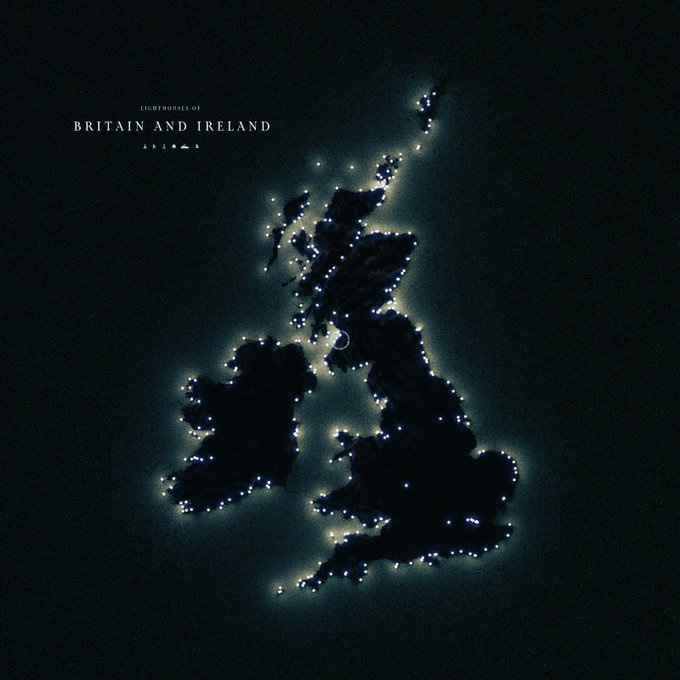
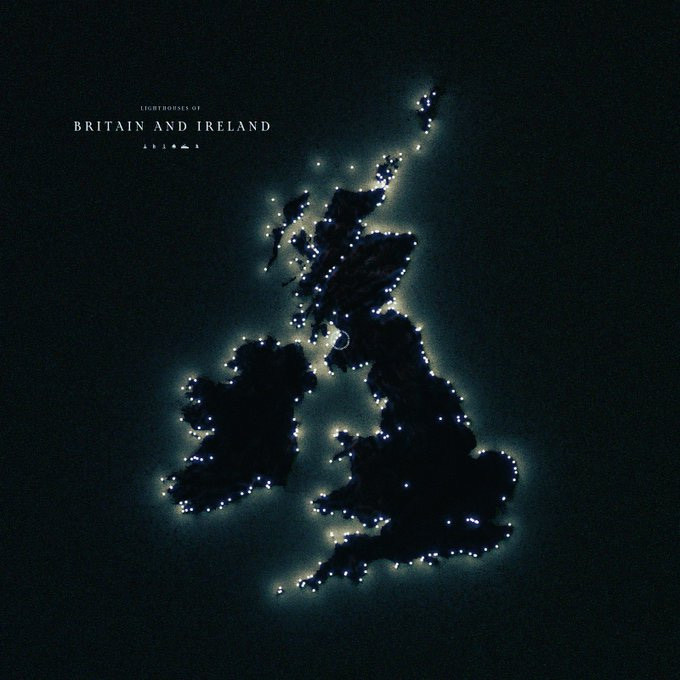
And there’s a fellow I found on Twitter and he basically just designs different maps. And I use it all the time, but I think it’s just incredible. I think this is a map of lighthouses, which is fine when you look at the UK and Ireland, because obviously it’s coastal and it’s really clear. But then he also does really lovely visual population density maps and sort of thinks differently about how he’s mapping the world. And I think they’re really important. So hopefully when you think about the task,
it translates really clearly to what the children are actually doing. They’re actively involved. They’re not just coloring in, they’re not listening. There’s a back and forth. There’s lots of discussion. There’s lots of oracy and there’s lots of sorting and frameworks in which you can use. But the last point in the sequence, which will bring you back around, is reading that evidence and refining. So just because the children have done it doesn’t mean it’s been good. And we hear it all the time.
It’s a poor proxy for learning, but that’s generally the idea we’re going down. So one of the things that we do is making sure we’re not carrying the same thing over and over again. And a friend of mine once said, we just use the same plan each year. We just change how we teach it. And I think you’re not, because you’re giving them the same instruction and the same task. So really what we need to be doing is thinking, well, what didn’t work? Why didn’t it work?
So this is an example of a task that we did last year. This was our task last year on the Spanish Armada and the children had two, four, six things that they had to sequence. They had to use these words in these paragraphs to sum up the journey of the Spanish Armada. This year, based on last year, I felt the children were really good last year, but so far what I’ve seen, I felt...
that didn’t need to do all six, but also thought that it might be too much information for the chosen people to ask. So we adapted it. And I thought, I’m thinking about the Spanish Armada, what are the three key things that were really instrumental? And obviously that’s the thing that I really wanted them to know in detail. So I wanted them to know that the fact that the English spotted them, which pushed them further up the channel. The fact that the Battle of Gravelines led by Francis Drake and the fire ships.
allowed them to break formation, which meant the English had a fighting chance. And then the actual eventual exit up the North Sea, which further depleted the armada as they retreated. So instead of doing all six, we’re focused on what we believed were the three key ones, and then sorted the information into sort of important factors. So then took that and did some more reasoning. So we’re not just sitting still. We’re not just accepting what we do every year as verbatim.
And as much as it annoys you sometimes, we’re changing it. One of the ways in which we do the refinement is we use feedback books. in our wider curriculum, I mean, all our subjects we use feedback books, so we don’t do as much heavy writing, but this is an extract of a feedback book. So we break it down into each lesson, praise specific children whose names have been unblocked.
And then I just make notes based on the tasks, based on how the children coped, ask myself some questions, points where I think the children struggle, things that I might need to do for the retrieval next lesson, things that they say. And I just have it out in the lesson. So when I have them discussing the year, things will just quickly sketch it down. And then there’s a point at the bottom where we’ve got end of unit notes or feedback on the unit for any changes next year. So then our history, it’ll pick these up, have a conversation about some of the notes.
and we feed back. So it is that constant reciprocal process. So I was thinking, well, the children don’t have enough experience to time-line. So they really need some clear, explicit process for that. And I felt lesson two, we maybe needed to change the task. So that’s something for me. But then that leads us back to obviously our intent. So we’ve done our environment. We’ve made those tweaks and we’re thinking, well, do we need to change the intention of this sequence of this lesson of this objective?
You have a curriculum as a skeleton, but you might need to make some changes along the way. And I’ve just chucked in some reading there, a book sort of inspired me. So yeah, that’s generally it, I think for me, obviously I know there’s some questions. So. Amazing. There was so much in there Carl, thank you so much. Sometimes it can go into a lot of detail. no, it was unreal.
I really liked the hiding subjects in a shroud of something else. That was really, really interesting. The cognitive demands of a task, the reciprocal process. There was really like a lot there. I also loved the time-lapse salt video. And, ⁓ I loved the roadmaps and the, the map is at Terrence from Twitter. The map you showed of the light houses of UK and Ireland. That was very, I found that very poignant. but yeah, we do have some questions now and please put.
questions in the chat or if you want to ask a question, just like raise your hand and I’ll unmute you. I think Neil had a really good question. So Neil, if you want to unmute. Hi, thanks. Thanks, Carl. It’s been really interesting hour. So thanks for that. So basically, ⁓ like most schools in Wales, the we’ve had a recent inspection and it seems to be quite prevalent in Wales that challenging people independence is something that
We have been questioned about a lot. So with that in mind, I was just wondering about how you develop the sequence of learning tasks and where would be a good place to start with introducing some of these tasks? Because it would be ⁓ very different from the way we do things at the moment. it’s looking at like, well, how do I dip my toes in the water really of introducing tasks? So with children, like you said, about completion.
they think they’re doing well if they finished everything quickly. It’s not really promoting much independence or much deep thinking. So how would we get the ball rolling is my question really. My ⁓ first thing is going, if you use something like organized ideas, that was my first place to start is thinking about sort of those open visual models. So getting children to be able to sort information is just a really basic way to start. And it can be as simple as doing odd one outs or just
categorizing things as relevant or not relevant. And I always go back to one of our nursery teachers. She always says, we should just start with it is or it isn’t. So getting children to sort something from it is or it isn’t. And then the amount of discussion that comes out of it sort of almost leads you into some deeper reasoning. And then you can just get them used to saying it is because, or it isn’t because. And I think that’s a gateway in. And then once you get used to using things like that,
then the hexagons, the three heads. And you can come up with your own. doesn’t really matter. I think the idea is tasks like that start with here’s some information. I want you to sort it, justify it and explain it. And I think just that little model is a really basic way in. And that’s how we are where we are now. Cause then we started thinking, well, how does a historian do that? How does geography do that? How does an artist do that? And I think it, cause
People sometimes get bogged down with different curriculum frameworks. So I have friends that teach in Ireland, friends that teach in Wales. And do know, it is what it is. You’ve got a particular curriculum framework, but thinking is thinking. You can think creatively. And I just think this is the way we do it. That’s great, thank you. No problem.
Awesome. ⁓ Yeah, something that really came through was the idea of like getting students to think deeply. And I found that like really powerful and interesting. There was a question from Sam in the chat, but I’ve actually lost it somehow. But I think unless anyone else has a question, maybe that’s the end. There was lots there really to take away. But if anyone
wants to ask questions like put up your hand or Yeah, mean, feel free to ask a question or to just message me. Obviously, join the Facebook group if you’re not already a member. And it’s primary tasks. And really, the idea was people were interested and I thought it’d be nice to have a space where I could share but also people can share back to think that sometimes it feels a bit me heavy. That’s not me thinking I’m amazing. It’s just
the hope that somebody will see it, adapt it, and then share a better way of doing it. Cause I do not for one second think that I know what I’m doing all the time. Cause I’m very clear that it wasn’t always great. And I think it’s just important to go, well, I like that. I’m going to take it and I’m going to adapt it. And I said this to Phil a while ago, but teachers are very good at hiding and not sharing. ⁓ And I suspect there’s a lot of amazing stuff going on in every classroom.
we just need to really think about what we’re doing. And I think people are hungry to do different things, which is why lots of things, lots of people are interested. ⁓ but was sometimes overcomplicating. think that’s just basic thing of just what is, do want them to do? ⁓ if you’re not on Facebook, that’s the only group I’ve set up, but you can follow me on Instagram, ⁓ which put it the link tree at the beginning. ⁓
I’m also on LinkedIn. just don’t do TikTok. I think I’ve gone past the YouTube. Top kick of TikTok. just think that’s one channel too many for me. there is a question from Sam, which is how much input goes in before moving into tasks? I understand not sharing planning, but sometimes it’s unclear how to get students to the point where they can access your tasks successfully. Yeah, I think
First thing to do is if you see something that I’ve shared that you think, how much has gone into this? Obviously I’m happy to answer. The other thing I think it depends on the task and it depends on the learning. So for example, yesterday when we were doing the Spanish Armada, there wasn’t a lot of input. was a, I told the story for about 10 minutes, the story of the Armada. And then the children had that map and they rehearsed it.
and told each other. we just did partner challenge. So partner A told partner B the story of the armada and then partner B had to say it again, but with clarity. And then partner A had to say it again, but with clarity. And it’s just making sure that everybody knows exactly what happened. And then that’s when we start to unpick. Well, the fact that the cut the anchor was really important. You go, well, that wasn’t really, because all that happens is you can’t thank your vote anymore. What was more important was the fact that John
Sir Francis Drake had decided to know what it is, we’ll just turf these old ships on fire and send them into the channel. That was more significant than the fact that they couldn’t anchor their boats. So it’s refining over and over again. And we do tons of discussion in class. And I think that’s the key thing. I sometimes do more teaching with like five slides and a couple of animated gifs. So an example of that would be
the heart. So when we’re looking at the chambers of the heart, there was just a really high quality gift of blood coming in and out of the chambers. And I just had that on the screen and we talked about it. And then I gave them the vocabulary and we tried putting it together and then we shared some examples. And then I did it again, but our history, geography, science lessons are always about an hour and a half in length. It’s only things like computing, for example, that’s usually about an hour.
but it really just depends on the lesson, it depends on the knowledge and it depends on the outcome you want. Obviously if you want something a bit more detailed then it might need a bit more or a bit more discussion, a bit more refinement. And it might just need a bit more classification and sorting, might just be all moving this to here. And I told my partner that I’m doing this. So one of the things we use a lot is stick and twist and obviously getting them to justify why they’re sticking and why they’re twisting and that takes a bit of time. But we moved away from.
pages of writing and one of the things that were first found and it was a question that got asked a lot was you’re not doing lots of extend a piece of writing in history, geography and science. But my perspective and argument was that there’s more quality in that two sentences and there would be in a whole page if it done it normally. And I think that’s the difference. There’s specific vocabulary used in the right context.
in little detail, I think is far better than a pH of nonsense. So hopefully that answers your question. But if you need to, you can send me a message and obviously I’m happy to elaborate more. There’s a few more questions. I’m going to, shall I give you them all at the same time? One is, there’s three, there’s three questions. One is, are you a three class going to local walk or on the estate and geography to look at human physical features? I agree about the physical features. Where, what else would you recommend? I think, um, usually little nature walks.
are good, but you have to look at history. Sometimes you just might not be able to look at the most obvious physical features. So it just takes a little bit of research and being more specific on what it is that you’re looking for. So like, for example, ours was down the high street and the only physical features are the trees. But I think you can find
other examples. So we have a woodland in our school, but it is only a woodland, not by design, but because it’s just full of weeds and shrubs. All we’ve done is cleared a bit of a path. I think that’s a very good example of a physical feature because it’s naturally occurring because it’s there because it’s there and obviously the nature comes and it depends on the age. you could, there’s other examples of things like
If you want to look at the fact that we are putting wild spaces back in, then you can add an element to that end. But I think it’s being clear, like Tom Sherrington says, what’s the core knowledge and what are you leaving out and what are you deciding to put in? So if you want to talk about rewilding as part of it, you can actually make that part of the conversation and say, well, actually we didn’t notice any physical features based on our definition. Why is that? Where do you think they might be? Is there somewhere where they’ve tried to put that back in? And I think that’s far more powerful than just
There’s loads of trees there. That’s obviously physical because it’s a tree. When you could say, well, that’s only there because people have planted it, why have people planted it, blah, blah, Because I had a conversation with the Year 5 teachers last year and I think they were a bit skeptical about doing a walk and looking at houses to see if you could see solar panels, charging points. They were like, well, won’t really do much. But actually the children came back and they were buzzing because they able to go with their solar panel there, there was electric charging point there. And then we could compare that using Google Maps.
and go back 10 years, because obviously in a lot of Google Maps, particularly built up areas, you can go back in time on the map. So you can go back a few years and go, well, why weren’t they there? When did they start coming in? It was just really interesting conversation. I just thought it was interesting and really skeptical about doing it. And we’re trying to do something different. Thankfully, our geography lead agreed with me and Doug, who was in as well, and said, no, no, I think you should go. It’s really important. So hopefully that is a bit clearer. Awesome.
And then there’s one question, please explain more about stick or twist and then what does your instruction look like to build towards the task? When you say you tell the story, is there a lot of teacher talk under instruction? Also, did you model how to answer the tasks that require more writing a lot to begin with? Sometimes I suppose is the answer. So when we’re talking about instruction, sometimes there is more teacher talk. I try and break that up as much as possible when I know that it’s coming.
So giving them plenty of opportunity to clarify with a partner and plenty of opportunity to use vocabulary in a context, giving them things that they need to say, but not like verbatim in terms of sentence names. Sometimes there’s no teacher talk and it’s just quite interesting to see. So with our maps, for example, in geography, one of the things I’d just like to do is go, can you tell me about Syria, for example, from this map?
And then they give me some information and go, okay, here’s another map. Now, what can you tell me? Obviously I will always know the types of things I want so that it can steer them or clarify or just refine. And if they just say, well, I think that’s a river. When it’s not, it was not. It’s not a river. Things like that. think you just have to be clear on, but sometimes you don’t need to do much teacher talk. But yeah, I think there was another part that I maybe haven’t answered there Phil.
There was this one last question which was about the sticker twist. Yeah. Just explain a little bit more. So sticker twist, was basically it’s you give them a statement. So a lot of the time I say Mr. McGrath says blah, blah, blah. might be Mr. McGrath says rocks will never be a liquid because they’re a solid. Do you agree with Mr. McGrath? Yes or no? Why do you agree? Using evidence. And then I might present them with a counterpoint.
that I’ll sort of challenge the thinking that they’ve decided upon. And really what you’re trying to do is sort of challenge the foundation of what they’ve come up against. So you’re really pushing against what they think is true.
That’s sometimes quite tricky. And I haven’t always got it right, but when it is right, it’s brilliant. So a good example is this is an image of a Viking and it’s somebody with horns on their helmets. Vikings always have horns on their helmets. They say, well, I know that’s not true because that’s misconception, blah, blah, ⁓ But then you can present a different counterpoint. if...
you can look on our Facebook page and just type in sticker twist in the search bar and it’ll bring up some examples of sticker twist tasks. I quite like them, but again, one of the things I end up doing loads is go, oh, I love this. I’m going to use this for this lesson. I plan a task and then go, it doesn’t work. And then I’m left with this floating task that’s just sort of in the ether and purgatory that I just eventually have to find a place for. And you will, but I think it’s being brave to go, oh, that’s not going to work. And then move on to something else.
And sometimes that happens too. And I have to go now. It’s not going to work. I’m going to have to do something different. So yeah.
Amazing. Thanks so much, Carl. I didn’t know if you wanted to say anything about the Ambassador Program. Oh, yeah. No, that’s a really good point. So, yeah, we are starting an Ambassador Program at SHOCK. So if you want to be involved, we’ll send details out about that, about like an expression form. But yeah, it’d be great to have people involved. And we think it’ll be a good opportunity to be able to get more involved in SHOCK and hopefully learn a little as well.
So yeah, we’re really excited about that. And there’ll be more information, but I think, can you sign up via that QR code? Cool. If you scan the QR code, you can fill in the form. If you can’t, I’m sure you’ll pass it on then. Exactly.
Awesome. Thanks I’ll just say thank you. And obviously if anybody does want to ask more questions, you know where to find me on my socials or on Facebook. But it’s been great and thanks very much for the opportunity, Yeah. And thanks for everyone who came and asked great questions. We appreciate it. Yeah, it was awesome. Have a good afternoon. Have a good evening. ⁓