For SENCOs, inclusion leads and school leaders

What helps pupils with SEND in mainstream classrooms, and where Chalk fits

The research on SEND in mainstream schools points one way: the biggest lever is good teaching that every pupil gets, adapted so pupils keep the same goals. Here is that evidence, the Chalk tools that help with each part of it, what we are careful not to claim, and a one-page rationale you can adapt for your inclusion strategy.

In short

For pupils with SEND, the biggest lever is high-quality teaching for everyone, adapted so they keep the same goals. Chalk makes that quicker to prepare. The evidence is for the practices, not yet for Chalk itself.

Evidence checked October 2026 · Sources are listed at the end of the page

What the evidence says

Three documents shape what schools in England are asked to do this year. They agree on the essentials.

EEF, 2020

Special Educational Needs in Mainstream Schools

  • Good teaching for pupils with SEND is, to a great extent, good teaching for everyone.
  • Five approaches to use flexibly: explicit instruction, cognitive and metacognitive strategies, scaffolding, flexible grouping, and using technology.
Read it

EEF, July 2026

The EEF Guide to Inclusive Teaching

  • Start with strong teaching for everyone, then add adaptations that help pupils reach the same goals as their peers.
  • Support that oversimplifies a task, or takes away the chance to think hard, can hold pupils back.
Read it

DfE, 2026

Your inclusion strategy and the Inclusive Mainstream Fund

  • Every mainstream school in England publishes an inclusion strategy by 31 December 2026, with activities and budgeted costs.
  • Funded activity must be evidence-informed and sit under one of seven principles. Two are about the classroom: “evidence-based support prioritising early intervention” and “high quality adaptive teaching with curriculum designed for all learners”.
Read it

Five approaches, and where Chalk fits

The EEF’s five approaches for teaching pupils with SEND in mainstream classrooms, what the research behind each one says, and the Chalk tools that make it quicker to prepare.

1

Explicit instruction

Teach the key words and ideas clearly, before pupils need them.

What the research says

Clear explanations, modelling in small steps and frequent checks for understanding help every pupil, and pupils with SEND most of all. Teaching the key words of a topic before the lesson gives pupils who find reading or language hard a way in to the same content as everyone else.

EEF, 2020Rosenshine, 2012EEF, 2021Beck, McKeown and Kucan, 2013

In Chalk

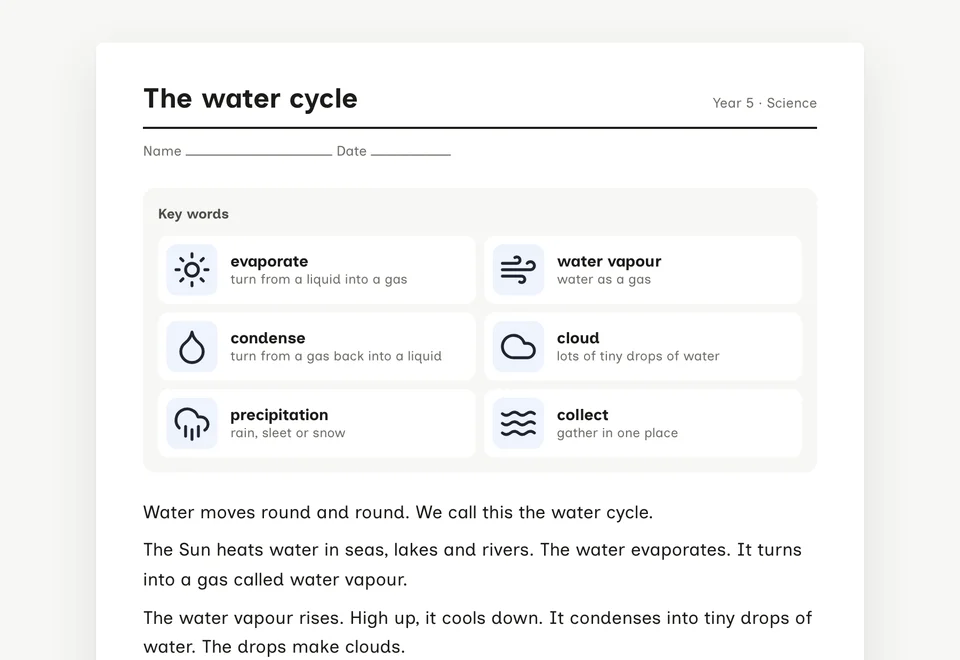
  • Visual Keywords: The key words of a topic with a definition and a picture, ready to pre-teach.
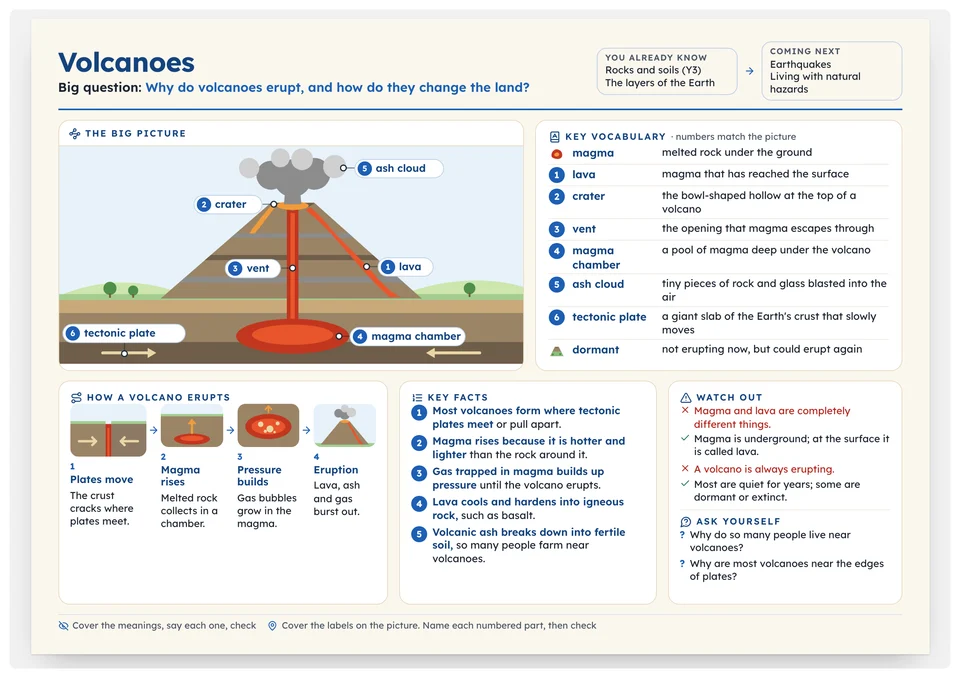
  • Knowledge Organisers: One page per unit: the big question, key words matched to a picture, what comes next.
  • Slides: A key words slide to say together, then explanations you can model from.

Be careful

Pictures help most in whole-class teaching. The largest meta-analysis of classroom trials found smaller, less certain effects for targeted groups such as pupils with SEND, so a picture supports the explanation; it does not replace it. Symbols for pupils who use AAC rest on a different reason: access to meaning.

Banks et al., 2026

Visual Keywords for the water cycle: each key word with a definition and a picture
Made with Chalk: Visual Keywords
2

Scaffolding

Give support that lets pupils do the same task, then take it away.

What the research says

Worked examples, sentence starters and partly completed organisers let pupils work on the same ambitious task as their classmates. Scaffolds work best when they respond to what the pupil can already do and are faded as they succeed.

Wood, Bruner and Ross, 1976van de Pol, Volman and Beishuizen, 2010EEF scaffolding frameworkEEF, 2026

In Chalk

  • Worksheet Builder: A support version and a stretch version of the same worksheet, never separate ability tiers.
  • Reading sheets in Studio: Any text, with key words and pictures taught first, the same questions for everyone, and a note of exactly what changed.
  • Slides talk tasks: Sentence stems and talk roles so every pupil can join the discussion.

Be careful

Simplify the wrapper, not the learning. Plainer instructions and questions help; stripping the connecting words out of the text pupils learn from can make it harder to follow. Plan when each scaffold comes away.

Beck et al., 1991EEF, 2026

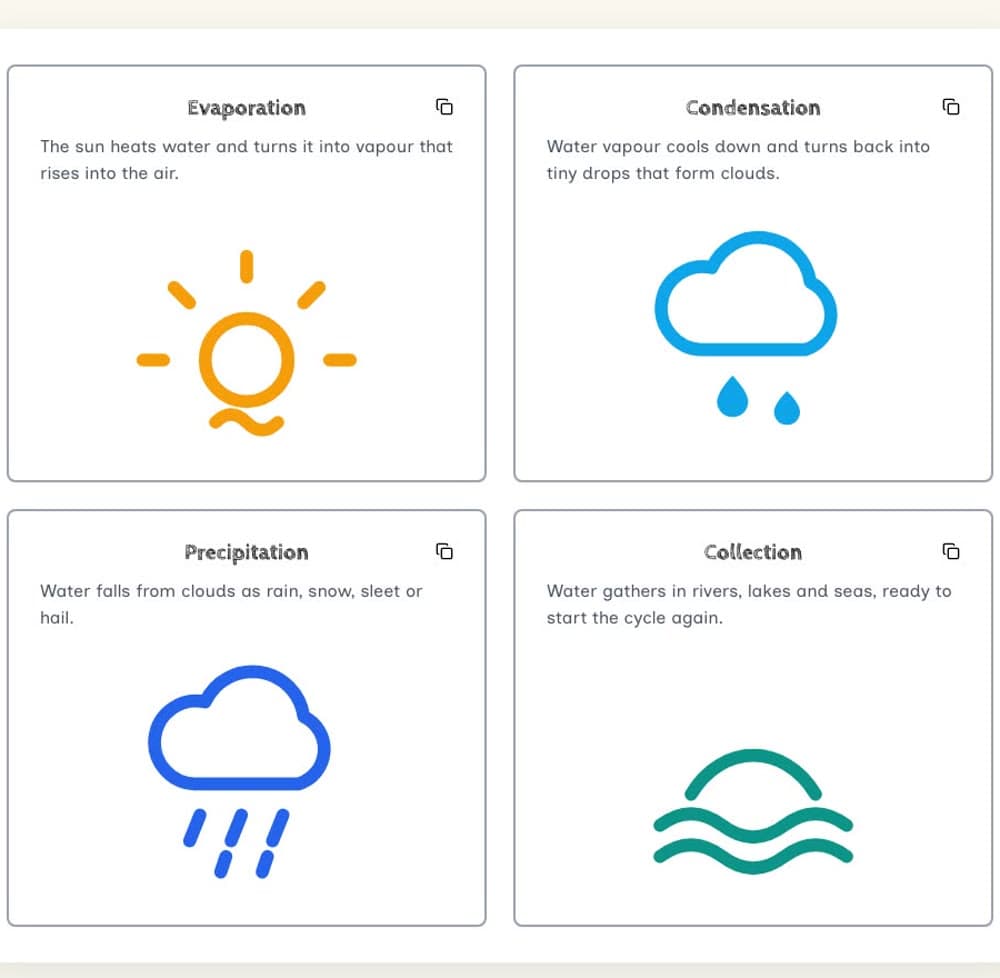
A reading sheet on the water cycle with key words and pictures first
Made with Chalk: a reading sheet in Studio
3

Cognitive and metacognitive strategies

Help pupils remember what they have learned and explain how ideas connect.

What the research says

Low-stakes retrieval practice is one of the most reliable ways to make learning last, in real classrooms as well as in the lab. Tasks that ask pupils to explain links and justify their choices build the organised knowledge they need to think well.

Dunlosky et al., 2013Agarwal, Nunes and Blunt, 2021Fiorella and Mayer, 2016EEF, metacognition guidance

In Chalk

  • Retrieval Task: Short questions on what came before, for the start of a lesson.
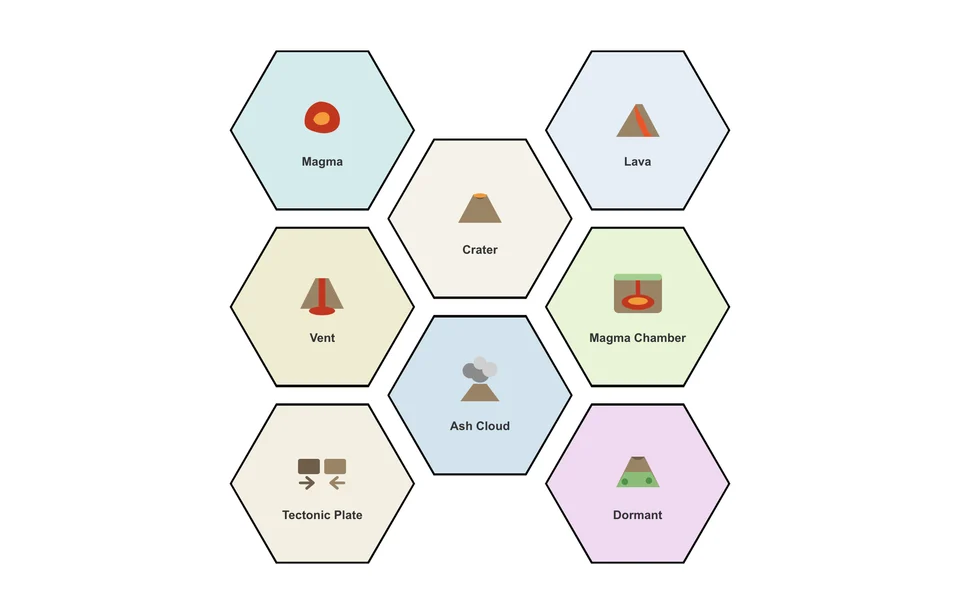
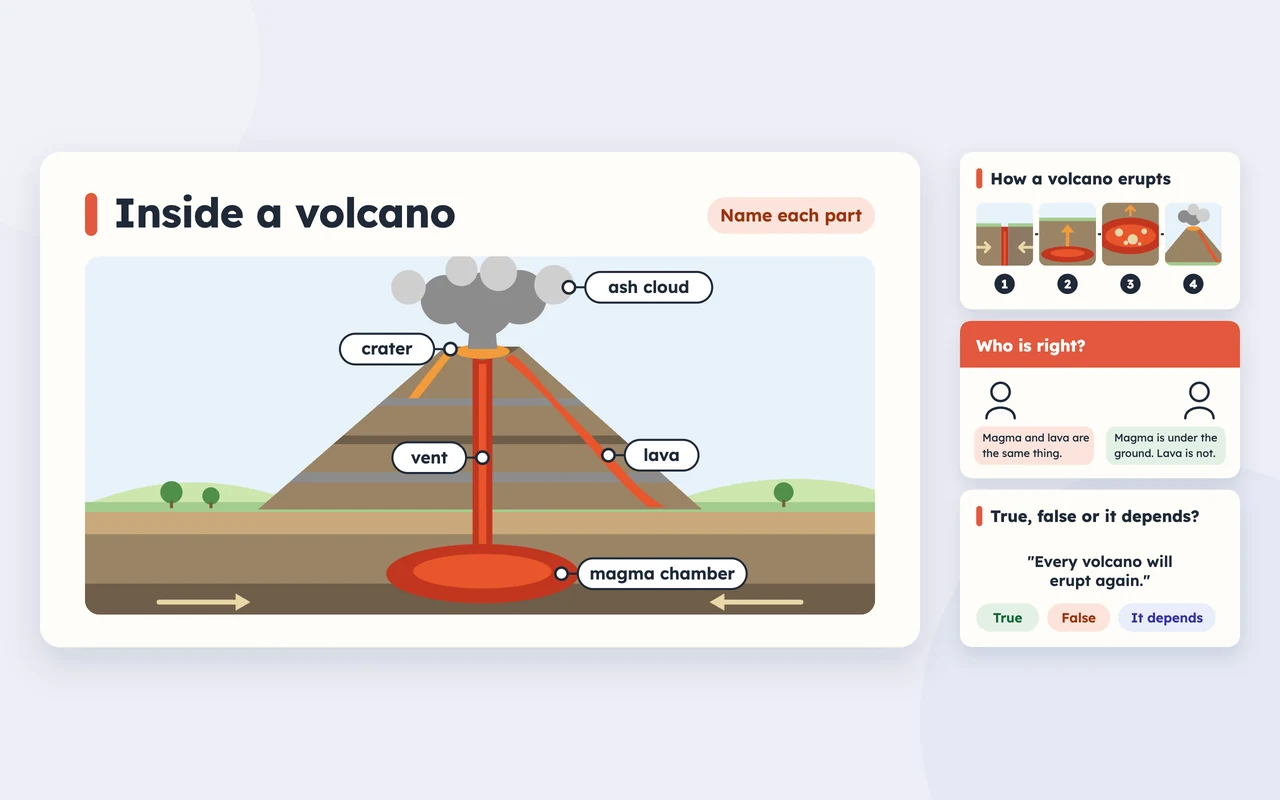
  • Hexagons: Pupils place linked ideas side by side and say why the tiles touch.
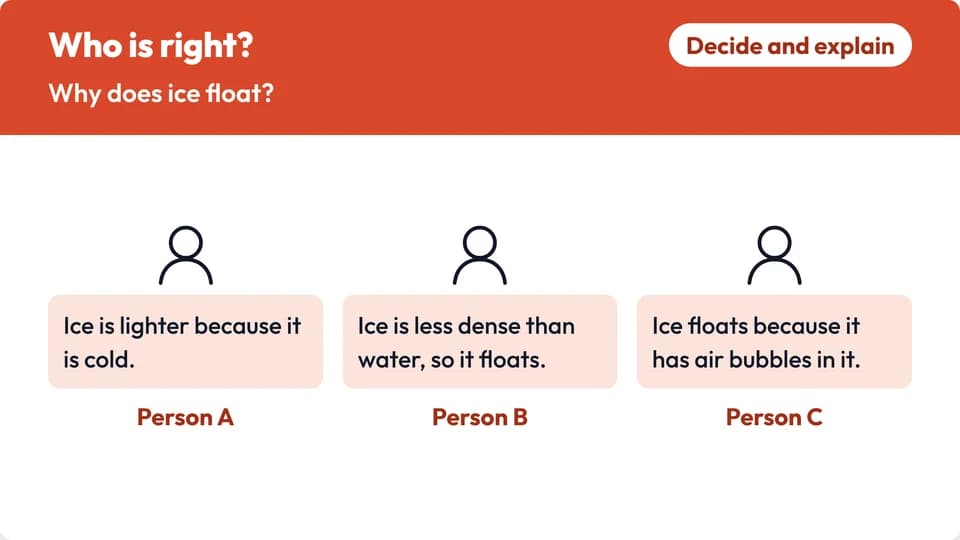
  • Three Heads: Who is right? Pupils weigh three views and explain their thinking.

Be careful

Keep retrieval low-stakes, with questions every pupil can read. Most of this research is not specific to pupils with SEND, so watch how your pupils respond and adjust.

Hexagon tiles about volcanoes, ready to cut out and link
Made with Chalk: Hexagons
4

Flexible grouping

Group pupils by what they need today, not by a fixed label.

What the research says

The EEF recommends grouping pupils for a specific purpose and changing the groups often. Fixed groups can lower expectations and narrow what pupils get to learn.

EEF, 2020

In Chalk

Be careful

Versions are there for the teacher’s judgement on the day, never a fixed track for a pupil.

A Who is right? slide with three views for pupils to discuss
Made with Chalk: Slides, a Who is right? task
5

Using technology

Make materials accessible by default, so nobody has to ask.

What the research says

The EEF lists using technology among its approaches for pupils with SEND, and its 2026 guide points to tools that remove a barrier to the same learning. Clear type and strong contrast help every pupil read from the back of the room.

EEF, 2020EEF, 2026

In Chalk

  • Slides: Type chosen for clear letter shapes (Lexend, Inclusive Sans or Atkinson Hyperlegible) and text contrast of at least 7:1 on every theme.
  • Visual Sentences: Symbol-supported sentences for pupils who use AAC.
  • Translate: A resource in a pupil’s home language alongside the English.

Be careful

Evidence that a special font improves reading for dyslexic pupils is weak, so we choose fonts for clarity and treat them as good practice, not a treatment. Technology removes a barrier; it does not replace teaching.

Kuster et al., 2017

A Chalk slide in the Quiet board theme beside its accessibility checks
Made with Chalk: Slides, with its accessibility checks

What teachers tell us

“Really being able to have just the vocabulary for some groups of children, icons for some groups of children. 8 words the students need to know or 5 words.”
Paula Renwick, Deputy Head TeacherBurnside Primary School, County DurhamThe same key words for the whole class, with different amounts of support.Read the case study
“What some staff struggle with is knowing what to do, and then generating the resources to go with it.”
Lucy Hodges, Deputy HeadteacherCornerstone, Dales Academies TrustIn a class where 12 of 21 children have SEND.Read the case study

CPD beside the tools

Knowing why it works

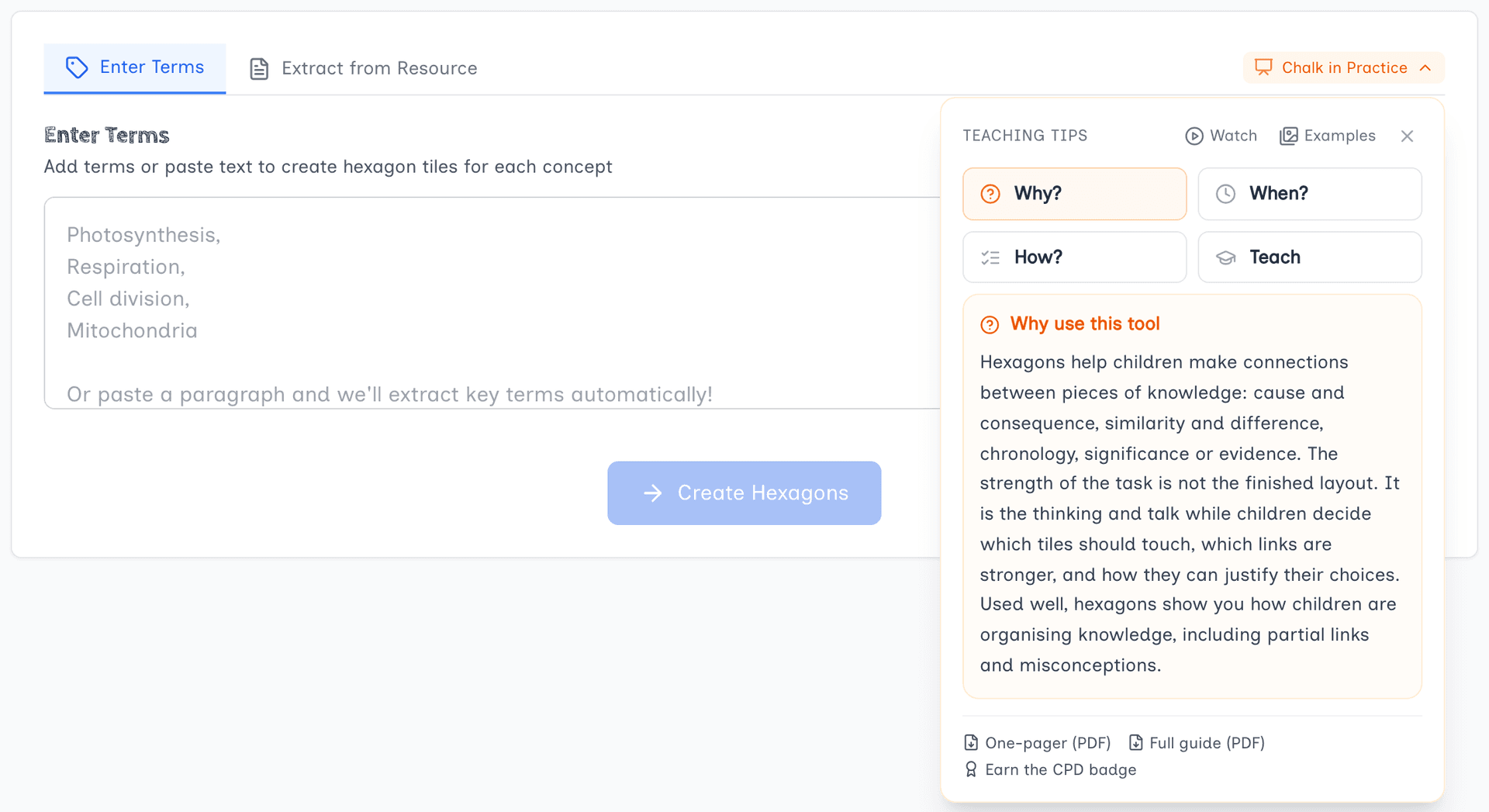
How well a task is taught matters as much as the task. Six of Chalk’s most-used tools come with Chalk in Practice: Karl McGrath’s short guide to why, when and how to use the tool, with a video, a one-page summary and a CPD badge. It follows what the EEF found makes professional development stick: building knowledge, then modelling and practice in your own classroom.

EEF, 2021, professional development

The Chalk in Practice panel beside a tool: Why, When, How and Teach

What we are careful not to claim

  • The evidence on this page is for the teaching practices. Chalk itself has not yet been tested in a trial.
  • Time saved is what teachers tell us, not a measured result.
  • Chalk is a tool for teachers’ judgement. It is not an intervention, and it does not replace specialist advice or a pupil’s plan.
  • We keep this page current: when new evidence changes what we can say, we change the page and the tools.

Using your inclusion budget

Many schools ask whether Chalk can come from their Inclusive Mainstream Fund. Only your school can decide that. These are the rules the DfE has published, so you can judge for yourself.

  • Funded activity must be evidence-informed and sit under at least one of the seven principles of inclusion.
  • It must not pay for general running costs, or subsidise spending on activity you already had. A renewal of a subscription you already pay for is unlikely to count; a new use, such as all staff pre-teaching vocabulary, might.
  • Your inclusion strategy, published by 31 December 2026, names the activities and their budgeted costs.
  • Money from 2026 to 2027 can be carried forward and must be used by 31 March 2028.
  • DfE, 2026, conditions of grantDfE, 2026

The two classroom principles, in the DfE’s words

  • “evidence-based support prioritising early intervention”
  • “high quality adaptive teaching with curriculum designed for all learners”

Your one-page rationale

Fill in a few details and print it, or save it as a PDF, for your business manager, governors or inclusion strategy. Nothing you type leaves this page.

What you will use it for

Rationale

[School]

Using Chalk to support high-quality adaptive teaching for pupils with SEND

5 November 2026

What we will do

  • Teachers pre-teach the key words of each new unit, with definitions and pictures, so pupils with SEND meet the vocabulary before the lesson that needs it.
  • Teachers make support versions of the same task, so pupils with SEND work towards the same goals as their classmates, with scaffolds that are faded over time.

Why: the evidence

The EEF finds that, to a great extent, good teaching for pupils with SEND is good teaching for everyone, and names five approaches to use flexibly. Its 2026 guide asks that adaptations help pupils reach the same goals as their peers.

  • Explicit instruction (EEF, 2020; Rosenshine, 2012; EEF, 2021; Beck, McKeown and Kucan, 2013)
  • Scaffolding (Wood, Bruner and Ross, 1976; van de Pol, Volman and Beishuizen, 2010; EEF scaffolding framework; EEF, 2026)

Principle of inclusion

“high quality adaptive teaching with curriculum designed for all learners”

How we will know it is working

  • Pupils’ use of the key words in talk and writing, checked at the end of each unit.
  • How many pupils with SEND complete the class task, and how much support they need as the term goes on.
The evidence is for the teaching practices; Chalk itself has not yet been tested in a trial. Full summary and sources: app.chalklearning.io/evidence/send-and-inclusion

Questions schools ask

Can we use our Inclusive Mainstream Fund for Chalk?

Your school decides. The DfE asks that funded activity is evidence-informed, sits under one of its seven principles and is new rather than subsidising something you already had. If you plan a new use, such as every teacher pre-teaching vocabulary, set it out in your inclusion strategy with its cost and how you will know it is working.

Has Chalk been tested in a trial?

Not yet. The evidence on this page is for the teaching practices Chalk helps with, such as explicit instruction, scaffolding and retrieval practice. We say this plainly because it matters when you weigh up any tool.

Is Chalk an intervention for pupils with SEND?

No. Chalk helps teachers prepare high-quality teaching for the whole class, with adaptations that keep the same goals. It sits alongside your interventions and specialist advice, not in place of them.

Does it help pupils learning English as an additional language?

Many of the same practices help: key words taught first, pictures that carry meaning, and resources translated alongside the English. As with SEND, the evidence for pictures is stronger for whole-class teaching than for targeted groups.

Do we need to enter anything about a pupil?

No. Chalk’s teaching tools work from a topic or a text. Our Use of AI page explains how we handle data and the AI we use.

Where should a SENCO start?

Pick one routine every class can use, such as pre-teaching the key words of each unit, and agree how you will check it is working. Twenty minutes with staff is usually enough to start.

Sources

  1. Education Endowment Foundation (2020). Special Educational Needs in Mainstream Schools: guidance report.
  2. Education Endowment Foundation (2026). The EEF Guide to Inclusive Teaching.
  3. Department for Education (2026). Developing an inclusion strategy using the inclusive mainstream fund.
  4. Department for Education (2026). Inclusive mainstream fund for schools: conditions of grant 2026 to 2027.
  5. Rosenshine, B. (2012). Principles of Instruction: research-based strategies that all teachers should know. American Educator, 36(1).
  6. Education Endowment Foundation (2021). Improving Literacy in Key Stage 2: guidance report (second edition).
  7. Beck, I. L., McKeown, M. G. and Kucan, L. (2013). Bringing Words to Life: robust vocabulary instruction (2nd edition). Guilford Press.
  8. Banks, Curran, Hall, Sims and Meliss (2026). When and how to use visuals effectively: a meta-analysis of dual coding in the classroom. Ambition Institute (data on OSF).
  9. Wood, D., Bruner, J. S. and Ross, G. (1976). The role of tutoring in problem solving. Journal of Child Psychology and Psychiatry, 17(2).
  10. van de Pol, J., Volman, M. and Beishuizen, J. (2010). Scaffolding in teacher-student interaction: a decade of research. Educational Psychology Review, 22.
  11. Education Endowment Foundation. Scaffolding framework for teaching assistant-pupil interactions (from Making Best Use of Teaching Assistants).
  12. Beck, I. L., McKeown, M. G., Sinatra, G. M. and Loxterman, J. A. (1991). Revising social studies text from a text-processing perspective: evidence of improved comprehensibility. Reading Research Quarterly, 26(3).
  13. Dunlosky, J., Rawson, K. A., Marsh, E. J., Nathan, M. J. and Willingham, D. T. (2013). Improving students’ learning with effective learning techniques. Psychological Science in the Public Interest, 14(1).
  14. Agarwal, P. K., Nunes, L. D. and Blunt, J. R. (2021). Retrieval practice consistently benefits student learning: a systematic review of applied research in schools and classrooms. Educational Psychology Review, 33.
  15. Fiorella, L. and Mayer, R. E. (2016). Eight ways to promote generative learning. Educational Psychology Review, 28.
  16. Education Endowment Foundation. Metacognition and Self-Regulated Learning: guidance report.
  17. Kuster, S. M., van Weerdenburg, M., Gompel, M. and Bosman, A. M. T. (2017). Dyslexie font does not benefit reading in children with or without dyslexia. Annals of Dyslexia, 68.
  18. Education Endowment Foundation (2021). Effective Professional Development: guidance report.

Written by the Chalk learning team. Questions or a correction? [email protected]