Chalk evidence
Quicker today,better tomorrow
Teachers are the most important thing a school can improve. This is our theory of what a teacher is, in four ideas, with the evidence behind each.

Phil BellCo-founder, Chalk
Tap an idea to jump to it, or scroll to read them all.
Teacher quality is the most important instrument for school improvement.
Of everything a school can change, the quality of its teaching makes the biggest difference to how much pupils learn, and the biggest of all for pupils from disadvantaged homes. The surest way to improve a school is to help its teachers get better.
The evidence
The Sutton Trust
Improving the impact of teachers on pupil achievement in the UK, 2011
For pupils from disadvantaged backgrounds, a very effective teacher is worth a whole extra year of learning: 1.5 years’ progress in a school year, against 0.5 years with a poorly performing teacher.
Michael Barber and Mona Mourshed
McKinsey, 2007
Studied the school systems at the top of the international tables and summed up what they share: “The quality of an education system cannot exceed the quality of its teachers.”
What this means for Chalk
- We build for teachers. Every tool is made for a teacher to use, and the teacher decides what reaches the class.
- Time we save only counts if it goes back into teaching.
Sources
- Sutton Trust (2011). Improving the impact of teachers on pupil achievement in the UK: interim findings.
- Barber, M. and Mourshed, M. (2007). How the world’s best-performing school systems come out on top. McKinsey & Company.
Teachers should have the best quality tools.
We believe you can teach anything to anyone, as long as the learning is designed accessibly. As teachers, we also know how long that takes: storyboards, graphic organisers and Frayer models are slow to make because of the formatting and design.
So the best tools do two jobs. They follow what we know about how pupils learn, and they make it quick. We agree with Peps McCrea that learning should be accessible by default.
The evidence
Richard Mayer
Multimedia Learning, 2009
Pupils learn more deeply from words and pictures together than from words alone. Mayer and colleagues tested this 11 times, and every comparison favoured words and pictures, with a median effect size of 1.39 on transfer.
Banks and colleagues
Ambition Institute, 2026
The largest meta-analysis of dual coding in classrooms found clear gains in whole-class teaching, and smaller, less certain effects for targeted groups such as pupils with SEND.
What this means for Chalk
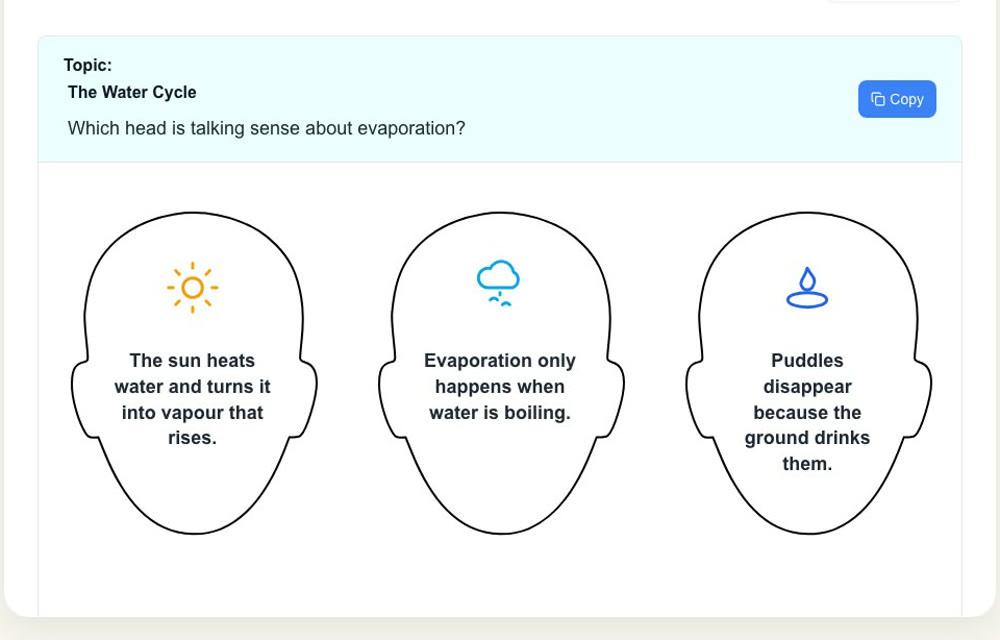
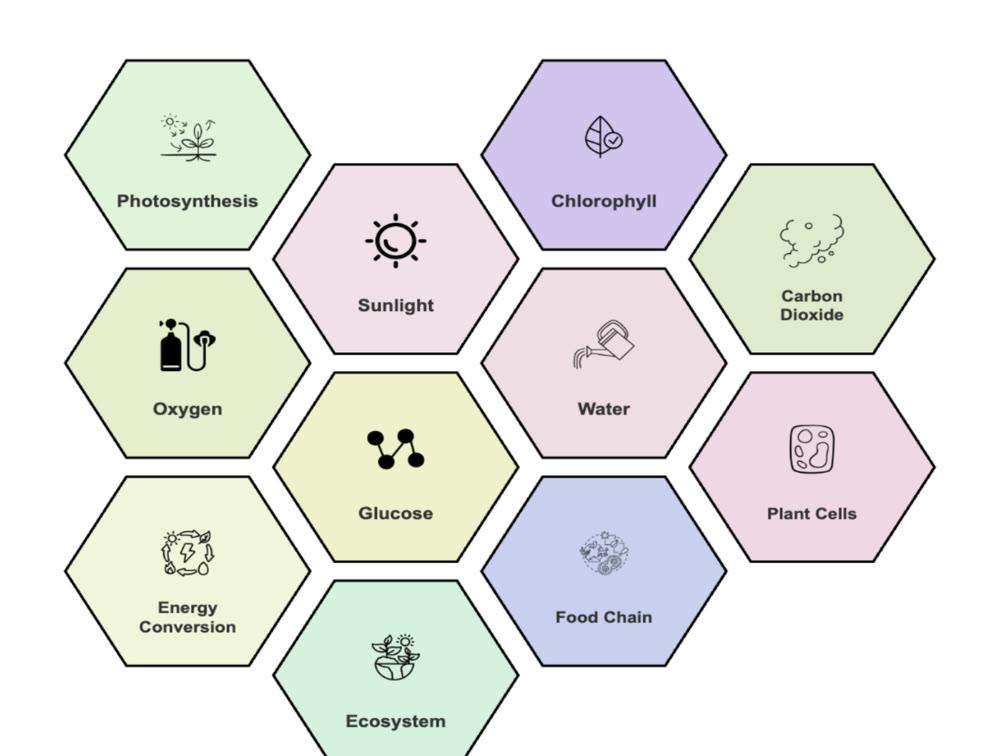
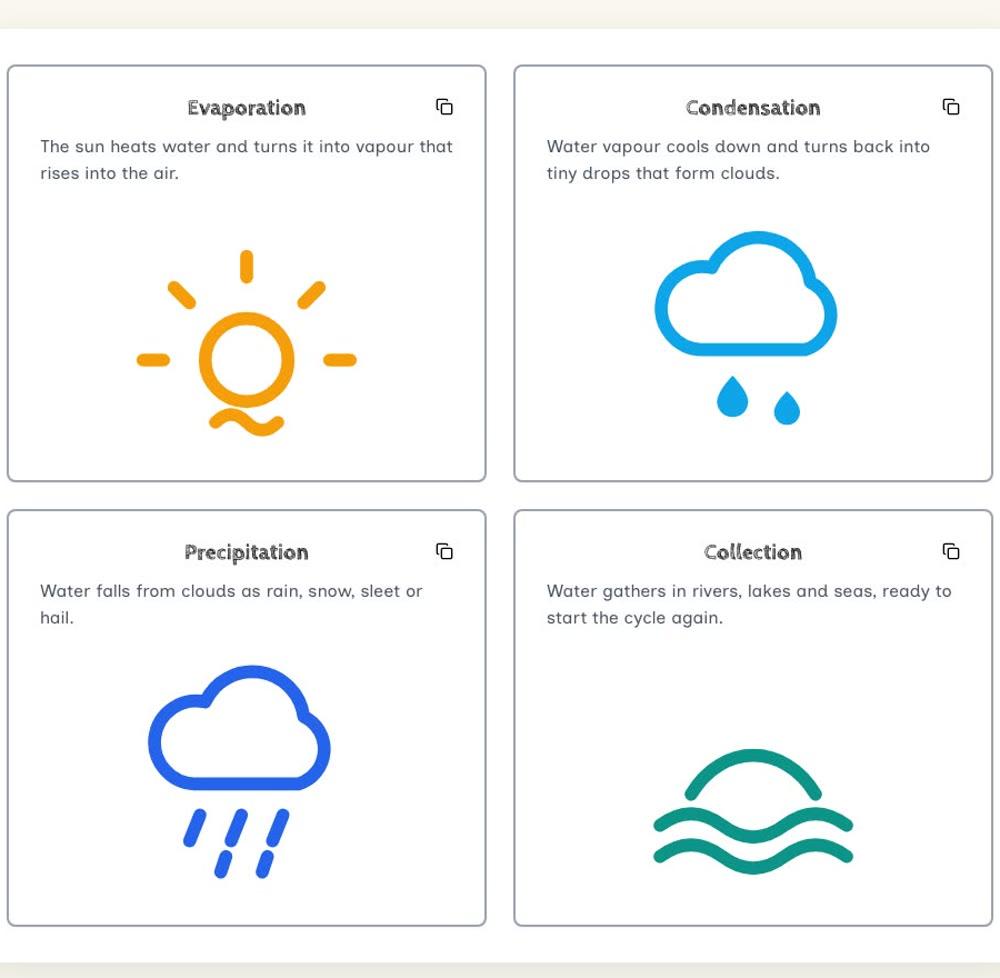
Every Chalk tool helps you make materials where:
- words come with well-designed pictures
- text sits next to the picture it describes
- anything that doesn’t help learning is left out
- the important parts are clearly signalled
- the parts are taught before the whole system
Made with Chalk
Sources
- Mayer, R. E. (2009). Multimedia Learning (2nd edition). Cambridge University Press.
- Banks, Curran, Hall, Sims and Meliss (2026). When and how to use visuals effectively: a meta-analysis of dual coding in the classroom. Ambition Institute.
Teachers need CPD in the flow of work.
Most teaching skill is built while planning and teaching the next lesson, not on an INSET day. Professional learning sticks when it arrives at the moment it’s needed, is about the task in hand, and comes round again until it becomes habit.
The evidence
Education Endowment Foundation
Effective Professional Development, 2021
Found 14 mechanisms behind professional development that works, in four groups: building knowledge, motivating teachers, developing teaching techniques and embedding practice. Embedding means prompts in context, action plans and repeating the new habit where it will be used.
Matthew Kraft, David Blazar and Dylan Hogan
Review of Educational Research, 2018
Across 60 studies, coaching on a teacher’s own lessons improved their teaching (an effect of 0.49) and their pupils’ results (0.18).
What this means for Chalk
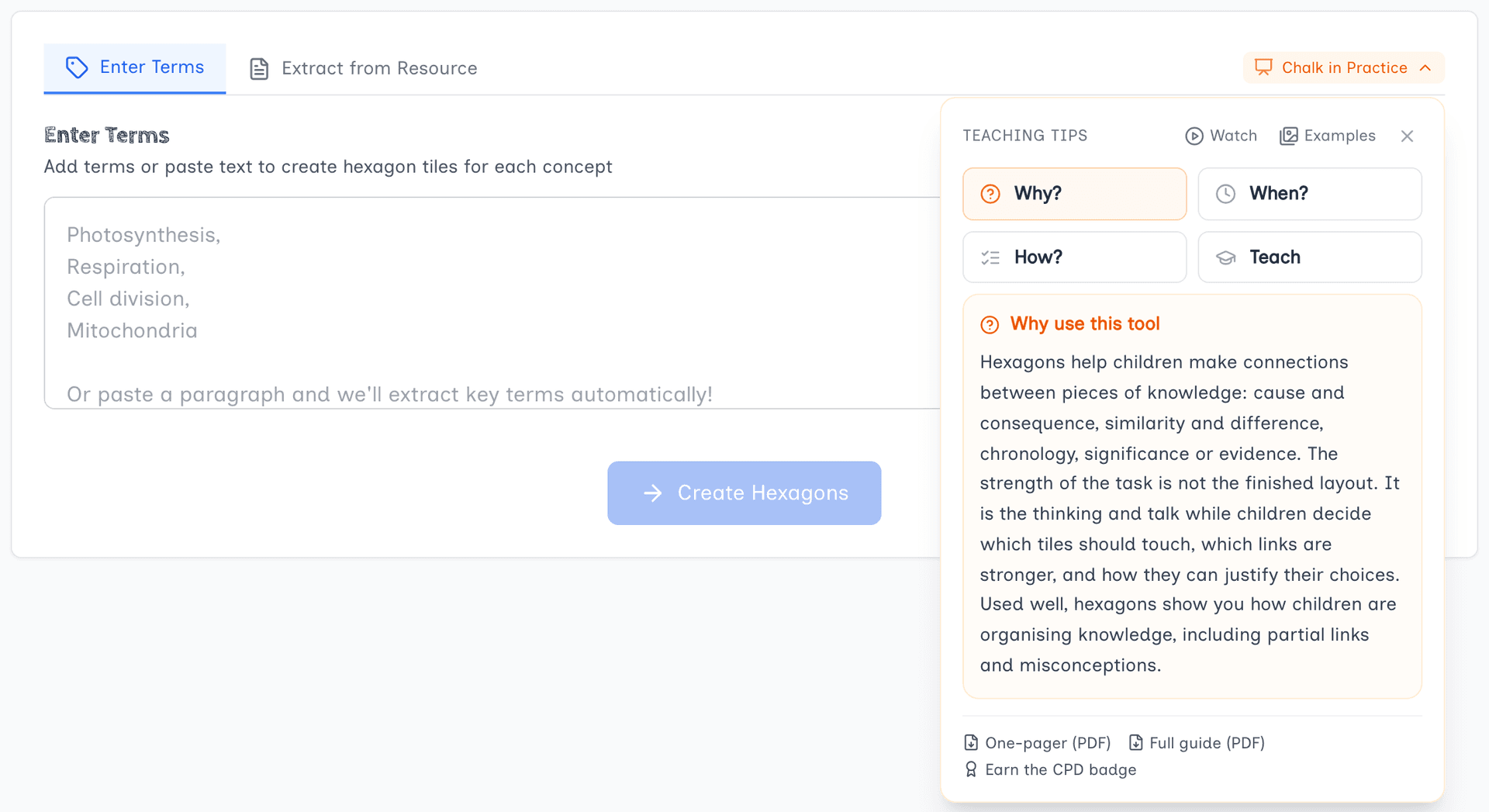
- Chalk in Practice sits beside the tool: why the practice works, when to use it, how to make it and how to teach it, a tap away while you make the resource.
- There is one module per tool, written with Karl McGrath.
Sources
- Education Endowment Foundation (2021). Effective Professional Development: guidance report.
- Kraft, M. A., Blazar, D. and Hogan, D. (2018). The effect of teacher coaching on instruction and achievement: a meta-analysis of the causal evidence. Review of Educational Research, 88(4).
AI teaching tools should make teachers’ jobs quicker, but build their capacity at the same time.
A tool that only saves time can quietly take the thinking away, and the skill goes with it. AI tools are also very good at producing lots of good but unformatted text. We want every minute Chalk saves to leave a teacher a little more expert.
The evidence
Education Endowment Foundation
ChatGPT in lesson preparation, 2024
Key stage 3 science teachers who used ChatGPT with a short guide spent about a third less time (31%) planning lessons and making resources. An expert panel found no drop in quality.
Hamsa Bastani and colleagues
PNAS, 2025
Pupils who practised maths with open ChatGPT did better while they had it, then 17% worse on the exam once it was taken away. A version built to give hints, not answers, largely removed the harm.
“Makes differentiated resources a breeze rather than the normal slog.”
What this means for Chalk
- Teachers have told us a storyboard that took 50 minutes now takes 4.
- Each tool is built around one practice with a track record, so the teacher learns the design as well as getting the sheet.
- The teacher stays the expert: you choose, cut and adapt what Chalk makes.
Sources
- Education Endowment Foundation (2024). ChatGPT in lesson preparation: a Teacher Choices trial.
- Bastani, H., Bastani, O., Sungu, A., Ge, H., Kabakcı, Ö. and Mariman, R. (2025). Generative AI without guardrails can harm learning: evidence from high school mathematics. Proceedings of the National Academy of Sciences.
Why visual?
As a teacher for five years, I found structured visuals to be a superpower for supporting all pupils, especially those with additional needs. That’s why we built Chalk.
The theory behind it
Working memory is limited
Well-designed materials cut the load on it. Mayer calls this the limited capacity assumption.
Two channels at once
We take in words and pictures through separate channels at the same time. Paivio called this dual coding, and Mayer calls it the dual channel assumption.
Thinking is spatial
Barbara Tversky argues that human thought is fundamentally spatial. George Lakoff showed how much of the language and metaphor we think with is spatial too.
Learning is active
Pupils learn when they organise the key ideas and link them to what they know. Mayer calls this active processing. It builds on Ausubel’s meaningful learning, and on Dan Willingham’s and Oliver Caviglioli’s work on making those links explicit.
We think schools rely too heavily on unformatted text, and AI risks making that worse. In the last ten years, evidence-based approaches from spaced retrieval to reducing cognitive load have become mainstream in classrooms. We think the next step is designing for powerful visual learning.
That doesn’t mean less reading. Designing information well supports reading too.
What we don’t claim
- The evidence here is for the ideas and the practices. Chalk itself has not yet been tested in a trial.
- Time saved is what teachers tell us, not a measured result.
- We haven’t yet measured whether Chalk builds teacher capacity. It’s the standard we hold ourselves to, and the next thing we want to test.
- We use the evidence on teacher quality to argue for investing in teachers, never to rank or judge them.
More of our evidence
- SEND and inclusionHigh challenge, high supportNine questions on inclusion, from reading age to scaffolds that fade, with the research and what we’ve built.
- Professional learningChalk in PracticeWhy each Chalk tool works and how to teach with it, one module per tool.
- AIUse of AIHow Chalk uses AI, and the rules we follow.
- ResearchThe Chalk white paperOur white paper on visual learning and how Chalk makes diagrams.
We update this page as the evidence changes. Questions or corrections go to [email protected]